

I rebuilt the report from the City’s own file
The Real Estate Board of New York published its Q2 2026 New Building Construction Pipeline Report on 23 August. The headline is a fall: 387 new building filings, down 33 percent from the first quarter, and 9.2 million square feet of proposed construction, down 56 percent. Inside that, 8,064 apartments across 172 proposed apartment buildings.
REBNY builds the report from New York City’s own Department of Buildings filings, which are public. So before writing anything I pulled the same file and counted it myself: every initial new-building application lodged in DOB NOW between 1 April and 30 June 2026. I get 387 filings, 9,243,536 square feet, 172 buildings with three or more apartments, and Queens on 140 filings against Manhattan’s 7. Every borough share matches to a tenth of a point.
I say that not to check REBNY’s homework, which is fine, but because everything further down this page comes out of the same 387 rows. If the reproduction holds, the rest is checkable too. The one thing I could not reproduce is the apartment count: I get 8,060 where REBNY prints 8,064, a gap of four apartments that is almost certainly a record amended between their pull and mine.
What REBNY does not do, because it is not their job, is ask what a quarter of filings means for a person trying to buy an apartment in this city. That is the rest of this article, and the short version is that this pipeline is not being built for you.
REBNY’s Q2 2026 headline numbers against a recount from the raw DOB file
REBNY’s published figures beside my own count of initial new-building applications filed in DOB NOW between 1 April and 30 June 2026. Multiple dwelling means three or more apartments, which is the Multiple Dwelling Law definition REBNY uses.
The report reproduces from the public file. Every figure below this point comes out of those same 387 filings, so any of it can be checked the same way.
Measure | REBNY | My recount | Note |
|---|---|---|---|
New building filings | 387 | 387 | Exact |
Proposed floor area | 9.2 million sf | 9,243,536 sf | Exact |
Apartment buildings | 172 | 172 | Exact |
Apartments proposed | 8,064 | 8,060 | Four apart |
Multifamily share of floor area | 89% | 89% | Exact |
Queens filings | 140 | 140 | Most of any borough |
Manhattan filings | 7 | 7 | Fewest of any borough |
Buildings by size: under 50 / 50-99 / 100-149 / 150+ | 111 / 52 / 1 / 8 | 111 / 52 / 1 / 8 | Exact |
Manhattan filed seven buildings, and one of them is the borough
Manhattan accounted for 1.8 percent of the city’s new building filings last quarter and 20.9 percent of its proposed floor area. Both of those are true, and the second one is almost entirely one building.
On 21 April, Extell Development filed for a residential tower at 80 West 67th Street on the former ABC campus at Lincoln Square. Eighty-six storeys, 430 apartments, 1,644,540 square feet. That single filing is 85 percent of everything Manhattan proposed in three months and 17.8 percent of the entire city’s.
Take it out and Manhattan’s quarter is 289,716 square feet and 274 apartments, which is 3.1 percent of citywide floor area. Of those 274 apartments, 198 are in three Washington Heights buildings above 181st Street. The rest is a 50-apartment building on lower Broadway, a 20-apartment building on Lispenard Street in Tribeca, and a six-apartment building on Grand Street.
That is the entire new-construction pipeline for the borough, for the quarter. Six small buildings and a supertall.
Every new building Manhattan filed in the second quarter of 2026
All seven initial new-building applications lodged in Manhattan between 1 April and 30 June 2026, largest first. Floor area is the total construction floor area on the filing, which includes cellars, retail and mechanical space, not sellable interior area.
The Extell tower proposes 3,825 square feet of building per apartment. Every other apartment building filed in the city last quarter averages 862, which is the difference between a condominium and a rental written into a building permit.
Address | Neighborhood | Floor area | Apartments | Storeys | Applicant of record |
|---|---|---|---|---|---|
80 West 67th Street | Lincoln Square | 1,644,540sf | 430 | 86 | Extell Development |
4388 Broadway | Washington Heights | 80,921sf | 99 | 16 | Westorchard Management |
673 West 187th Street | Washington Heights | 56,616sf | 72 | 16 | Westorchard Management |
317 Broadway | Tribeca | 51,530sf | 50 | 21 | 408 Hawthorn LLC |
341 Grand Street | Lower East Side | 50,000sf | 6 | 6 | The Grand Dairy |
611 West 181st Street | Washington Heights | 29,345sf | 27 | 8 | BBM Construction Corp |
35 Lispenard Street | Tribeca | 21,304sf | 20 | 8 | SilverLining Development |
Eight buildings of 150 apartments or more, and seven are subsidised rental
Here is the finding that decides whether any of this pipeline reaches a buyer. Exactly eight of the 172 apartment buildings filed last quarter propose 150 apartments or more, and they hold 1,860 apartments between them. Read the applicant names on the filings and seven of the eight are unambiguously subsidised rental: LIHTC ownership entities, a housing development fund corporation, an affordable development LLC. Three of them are phases of the same East New York project.
The eighth is Extell’s.
That is not a criticism of the seven. Permanently affordable rental housing is what New York needs most and those buildings are the good news in the report. It is a statement about what happens to somebody who reads a headline saying eight thousand apartments were filed and concludes that supply is coming. Almost none of that supply will ever be offered for sale, and the piece of it that will is one tower on the Upper West Side that will not finish this decade.
The picture gets thinner still lower down. Of the 387 filings, 215 of them, 56 percent, propose fewer than three apartments. That whole group produces 251 homes, mostly one and two family houses in Queens and on Staten Island. More than half the filing count is houses.
The eight apartment buildings filed at 150 apartments or more, Q2 2026
Every filing in the quarter proposing 150 or more apartments, largest first, with the applicant name as it appears on the Department of Buildings record.
Six of the eight are in Brooklyn. The three IUV entities are phases 5, 6 and 7 of Innovative Urban Village in East New York, which is 599 apartments of the 1,860 on its own.
Address | Borough | Apartments | Applicant of record | Reads as |
|---|---|---|---|---|
80 West 67th Street | Manhattan | 430 | Extell Development | Market rate |
164-02 Jamaica Avenue | Queens | 285 | Jamaica Affordable Development LLC | Affordable rental |
120-40 Flatlands Avenue | Brooklyn | 224 | IUV Building 5 LIHTC Owner LLC | Affordable rental |
530 Utica Avenue | Brooklyn | 224 | Not stated on the filing | Not stated |
120-30 Flatlands Avenue | Brooklyn | 206 | IUV Building 6 LIHTC Owner LLC | Affordable rental |
395 Louisiana Avenue | Brooklyn | 169 | IUV Building 7 LIHTC Owner LLC | Affordable rental |
129 Osborn Street | Brooklyn | 165 | Osborn Street HDFC | Affordable rental |
141 Van Siclen Avenue | Brooklyn | 157 | Rocklyn Asset Corp | Affordable rental |
Ninety-nine is a number the tax code chose
Nineteen of the 172 apartment buildings filed last quarter propose exactly 99 apartments. That is 11 percent of the buildings and 1,881 apartments, which is 23.3 percent of every apartment New York proposed in three months. Exactly one building was filed anywhere between 100 and 149 apartments. The full list of filings above 99, for the whole city, for the whole quarter, is: 137, 157, 165, 169, 206, 224, 224, 285, 430.
This is not my discovery. Commercial Observer and others have been writing about the 99-apartment building since the spring. What I can add is the size of it in one quarter and the historical baseline, because both filing systems are public.
The reason sits in the statute. Real Property Tax Law section 485-x, the tax exemption that replaced 421-a in 2024, defines a modest rental project as "more than five and less than one hundred" apartments, and a large rental project as "one hundred or more". Subdivision 3 then says that any eligible site of one hundred or more apartments has to pay construction workers under Labor Law sections 220 and 220-b at a floor of forty dollars an hour, rising two and a half percent every July. Subdivision 8 raises the affordable share from twenty percent to twenty-five. The filing fee goes from four thousand dollars a unit to five. The tax benefit is thirty-five years either way.
So the hundredth apartment costs money and buys nothing. Ninety-nine is where a developer stops.
Two clusters last quarter show what that looks like on the ground. Artist Construction LLC filed three buildings on 27 April, all fourteen storeys, all exactly 99 apartments, all in Mott Haven, on consecutive job numbers: 122 Bruckner Boulevard, 20 Brook Avenue and 521 East 132nd Street. That is 297 apartments. On 10 June, Waterfront Property Management filed 1029 and 1035 Atlantic Avenue in Bedford-Stuyvesant, two lots on the same Brooklyn block, both eighteen storeys, both 45,248 square feet, both 99 apartments, on consecutive job numbers and with identical job descriptions. That is 198 apartments.
Nothing there is improper. Section 485-x defines an eligible site as a tax lot, or as a zoning lot holding two or more buildings that are part of a single application. Separate applications on separate lots are separate projects, which is what the law says. The law is simply being read the way it is written.
Share of New York apartment-building filings proposing exactly 99 apartments
Initial new-building applications proposing three or more apartments, by filing system and period. 485-x was enacted in 2024; the first full quarter of filings under it was the third quarter of that year.
Across both of the City’s filing systems, 33 apartment buildings were filed at exactly 99 apartments in the twenty-four years before July 2024. In the eight quarters since, 107.
| Category | Share of apartment-building filings at exactly 99 apartments |
|---|---|
| 2000-2023 (BIS) | 0.06% |
| 2021-Jun 2024 | 0.46% |
| Jul 2024-Jun 2026 | 7.23% |
| Q2 2026 alone | 11.05% |
What 485-x offers someone buying a condominium, which is almost nothing
Everything above is a rental story, and that is not an accident of the market. It is written into the statute in two places that nobody covering 485-x as a labour story has much reason to mention.
The first is a single clause. Section 485-x(1)(y) defines a homeownership project as a building operated as condominium or cooperative housing, and then says it "shall not include a multiple dwelling or portion thereof operated as condominium or cooperative housing located within the borough of Manhattan." A new Manhattan condominium is excluded from New York’s flagship housing tax exemption by definition. That is one reason Extell can propose 3,825 square feet of building per apartment: a project that was never going to get the exemption has no reason to design around it.
The second is the qualifying test outside Manhattan. A homeownership project has to meet affordability option D, which requires that all of its apartments have an average assessed value per square foot of no more than eighty-nine dollars at the first assessment after completion, and that every buyer agrees in writing to keep the apartment as their primary residence for five years. The benefit is twenty years, against thirty-five or forty for rental.
I wanted to know how binding that eighty-nine dollars actually is, so I measured it. Taking every condominium apartment on our books that carries both a stated interior area and a City assessment, and converting the Department of Finance market value at the tax class 2 ratio of 45 percent, the median New York condominium sits at $169 of assessed value per square foot. Six percent of 1,958 apartments would clear the cap. Among condominiums in buildings flagged as new development, one of eighty-five. Outside Manhattan, where option D is the only route in, none of the twenty-two.
Put the other way round: on our data the median condominium asks about 4.4 times its Department of Finance market value, so an eighty-nine dollar assessment ceiling translates very roughly to $864 a square foot of asking price. Manhattan new development currently asks a median $1,747 a foot, Queens $1,517, Brooklyn $1,078.
That is a measurement of existing apartments rather than a simulation of how a new building would be assessed on its first roll, and the ratio has a wide spread, so treat $864 as an order of magnitude and not a threshold. It is still nowhere near the market. New York’s housing tax incentive is a rental programme, and the pipeline is doing exactly what it was paid to do.
What 485-x pays for, by project type
The four rental tiers and the homeownership tier, from the text of Real Property Tax Law section 485-x. Zone A is Manhattan below 96th Street plus five waterfront neighborhood tabulation areas in Brooklyn and Queens; Zone B is nine more outer-borough areas.
Crossing from 99 to 100 apartments adds a wage regime, five points of affordability and a thousand dollars a unit in filing fees, and extends the exemption by nothing at all. A Manhattan condominium is not on this table because the statute excludes it.
Project type | Apartments | Affordability required | Construction wage floor | Exemption |
|---|---|---|---|---|
Small rental | 6 to 10 | Half the apartments rent stabilised | None | 10 years |
Modest rental | 11 to 99 | 20% affordable, 80% AMI average | None | 35 years |
Large rental | 100 or more | 25% affordable, 80% AMI average | $40 an hour, rising 2.5% each July | 35 years |
Very large rental | 150 or more, Zone A or B | 25% affordable, 60% AMI average | $72.45 Zone A, $63 Zone B | 40 years |
Homeownership, outside Manhattan only | 6 or more | Average assessed value under $89 a foot; buyers sign a five-year primary residence covenant | None below 100 apartments | 20 years |
The for-sale apartments that do exist are not in Manhattan

Now turn from what was filed to what is actually for sale, which is the only supply anyone buying this year can touch. Across the five boroughs we currently hold 6,539 active for-sale listings. 274 of them are flagged as new development, and if you tighten that to buildings completed in 2023 or later, it is 83.
Nine of those 83 are in Manhattan. Twenty-seven are in Brooklyn. Forty-seven are in Queens.
Manhattan has 4,690 apartments on the market and roughly nine genuinely new ones. That is the part of this report that touches a buyer directly, and it is not going to change before 2030, because the buildings that would change it were not filed.
What follows from that is not complicated. If you want a new apartment in Manhattan you are competing in a very thin field and the sponsor knows it. If you are willing to cross a bridge, the field is five times deeper and the pricing shows it: our Brooklyn new-development inventory asks a median $1,078 a square foot against Manhattan’s $1,747.
Active for-sale inventory on our books, 25 August 2026
Live listings in our own database, counted this morning. New development is the feed’s own flag, which is generous; the third column tightens it to buildings the record says were completed in 2023 or later.
Queens carries five times Manhattan’s count of genuinely new for-sale apartments off an eighth of the inventory, and Queens is also where the most new buildings were filed last quarter. The gap widens from here.
Borough | Active | New dev | Built 2023+ | Median new-dev ask a foot |
|---|---|---|---|---|
Manhattan | 4,690 | 159 | 9 | $1,747 |
Brooklyn | 1,250 | 54 | 27 | $1,078 |
Queens | 599 | 61 | 47 | $1,517 |
What Manhattan new development looks like now: 256 East 4th Street, garden duplex
256 East 4th Street #GARDEN, New York, NY 10009

RLS IDX Data display by Real Estate Rebate Team LLC. This information is not verified for authenticity or accuracy and is not guaranteed and may not reflect all real estate activity in the market. ©2026 The Real Estate Board of New York, Inc., All rights reserved.
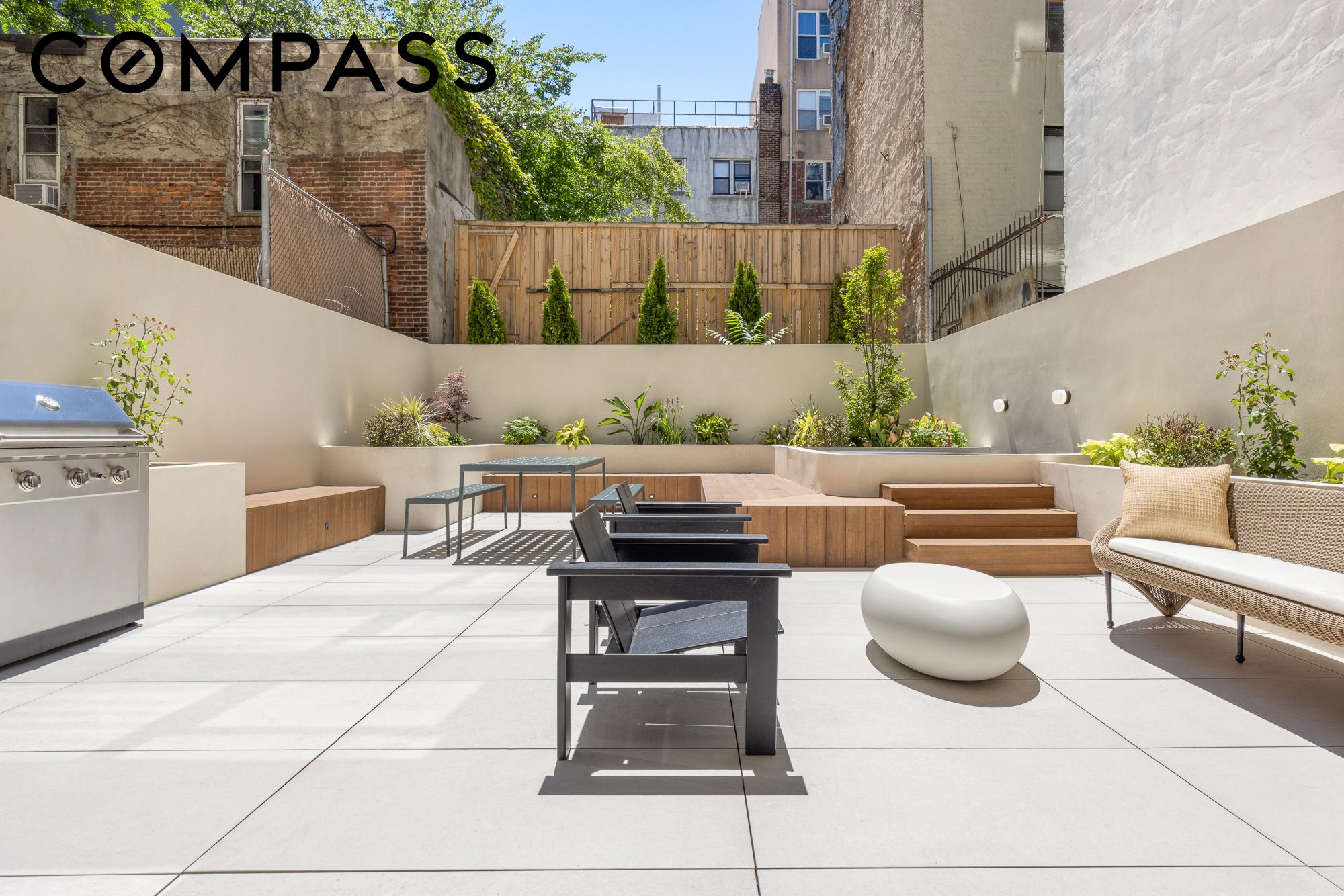
Three bedrooms, 1,813 square feet and a planted back garden in a small East Village building completed this year, asking $3,350,000, which is $1,848 a foot. Common charges are $887 a month and the taxes run $23,148 a year. It is a good illustration of what Manhattan actually delivers now that the exemption is closed to it: not a tower, a boutique building on a side street.
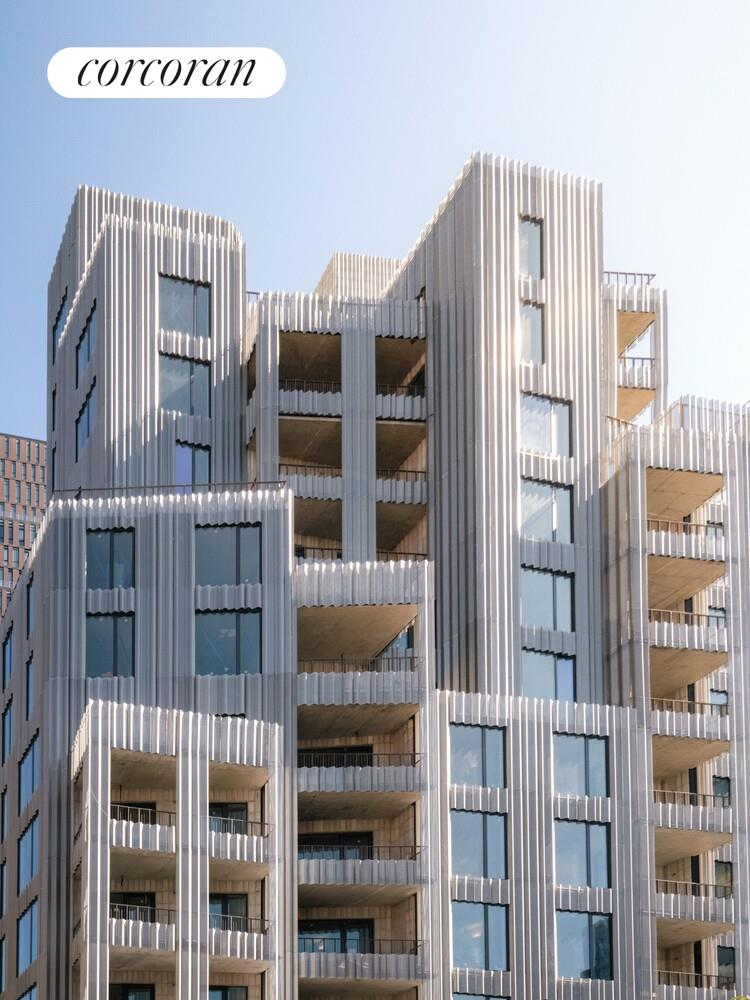
The Brooklyn comparison is closer than most people expect. 9 Chapel Street in Downtown Brooklyn, completed 2024, is asking $1,783 a foot on the three-bedroom below. That is a 3.6 percent discount to the East Village apartment, not a different market.
And what Brooklyn delivers: 9 Chapel Street, Residence 11A
9 Chapel Street #11A, Brooklyn, NY 11201
RLS IDX Data display by Real Estate Rebate Team LLC. This information is not verified for authenticity or accuracy and is not guaranteed and may not reflect all real estate activity in the market. ©2026 The Real Estate Board of New York, Inc., All rights reserved.
Does a quarter of construction filings change what you should do?
What are you actually trying to buy in the next twelve months?
A new-construction apartment in Manhattan
You want the new building, the warranty, the amenity package and the sponsor unit rather than somebody’s renovation.
Expect the field to stay thin
Nine of our active Manhattan listings are in buildings completed since 2023, and Manhattan filed 274 apartments last quarter outside the Extell tower. Nothing filed in 2026 delivers before roughly 2030. Waiting for more choice is not a strategy that has anything behind it.
A new apartment, and I will cross a bridge for it
Downtown Brooklyn, Long Island City, Greenpoint and Astoria are all live options and you are not tied to a Manhattan postcode.
Potential exemption
This is where the depth is
Queens filed 140 new buildings last quarter and Brooklyn proposed the most apartments of any borough at 2,874. Our Brooklyn new-development inventory asks a median $1,078 a foot against Manhattan’s $1,747. You are buying into the part of the city that is actually being built.
A sponsor unit in a brand new building, wherever it is
You are buying from the developer rather than from an owner, so the contract is theirs and the closing costs follow their rules.
Potential exposure
Read who pays the transfer taxes
Sponsors customarily ask the buyer to pay both transfer taxes on top of the mansion tax. On a $3,350,000 purchase that is $47,738 to the City and $13,400 to the State, on top of $50,250 of mansion tax. It is negotiable and it is worth negotiating.
I was hoping the pipeline would bring prices down
You read that eight thousand apartments were filed and wondered whether sitting out a year improves your position.
Review required
Not from this pipeline
Seven of the eight largest buildings filed are subsidised rental and nothing on the list is for-sale supply in Manhattan except one tower. A filing is also not a building: proposed apartments should never be read as completed housing, and REBNY says so in its own report.
One quarter of filings should not change a purchase decision on its own. What it should change is any expectation that waiting produces more choice, particularly in Manhattan.
My assessment
I have been reading these quarterly reports for years and this is the first one where the shape of the pipeline matters more than its size. The size is down and everybody will write that. The shape is the story: the city is building rental, at ninety-nine apartments a building, in the Bronx and Brooklyn and Queens, and the one large for-sale project in the quarter is a supertall on the Upper West Side that does not need the tax exemption because it cannot have it.
If you are buying an apartment in the next year or two, the practical conclusion is that today’s inventory is the inventory. There is no wave coming. In Manhattan in particular the new-construction field is nine apartments deep on our books and there is nothing in the filings to widen it this decade. Buy on the merits of the apartment in front of you, not on a supply forecast.
The second thing I would say is about closing costs on new development, because that is where the money actually is for a buyer. Both of the apartments above sit between three and five million dollars, where the mansion tax is 1.5 percent of the whole price. On the East Village duplex that is $50,250. On Residence 11A it is $52,485. If the sponsor also asks you to pay their transfer taxes, which is normal, add another 1.425 percent to the City and 0.4 percent to the State.
Here is how we handle that. The commission is the seller’s to offer, and on new development it is often higher than on a resale. Whatever it turns out to be, we share up to half of it with you at closing. At 3 percent your share can be up to 1.5 percent, which on the East Village duplex is $50,250 and on Residence 11A is $52,485. Look at those figures against the paragraph above: between three and five million dollars, a 3 percent commission halved covers the mansion tax exactly, because both run at 1.5 percent of the price. At 5 percent, which sponsors do pay, your share can be up to 2.5 percent, or $83,750 and $87,475.
That is the part of this you control. The pipeline is not going to help you and the tax code was not written with you in mind, but what you pay at the closing table still is a negotiation, and up to half of a commission is a real number.
If you want to talk through a specific building, get in touch.
Sources and methodology
This article was written by Régis Roumila, a licensed real estate broker in New York and New Jersey and the founder of Real Estate Rebate Team, with more than 25 years in the New York City market.
Methodology. On 25 August 2026 I pulled every job application filing of type New Building from the City’s DOB NOW dataset with a filing date between 1 April and 30 June 2026, and kept only initial filings, which are the job numbers ending -I1. That gives 387 filings, which is REBNY’s published count, and reproduces their floor area, borough shares and building-size bands exactly; their apartment total is four higher than mine. The historical series joins that to the legacy BIS filings dataset, which covers 40,634 apartment-building filings from 2000 to 2023. Where REBNY and the DOB record disagree on the floor area at 80 West 67th Street, 1,654,440 against 1,644,540, I used the City’s figure and have said so beside the table. Tenure on the eight largest filings is my reading of the applicant entities, because DOB filings do not record whether a building will be rental or for sale. The 485-x tiers come from the statute text, not from a summary of it. Inventory figures are our own mirror of the REBNY RLS feed counted the same morning and will drift. Assessed values per square foot combine Department of Finance market values with the interior areas on our listings at the tax class 2 ratio of 45 percent; that measures existing apartments rather than simulating how a new building would first be assessed, and the $864 a foot translation rests on a median ratio with a wide spread, so it is an order of magnitude rather than a threshold.
Primary sources
- REBNY, Q2 2026 New Building Construction Pipeline Report, 23 August 2026
- NYC Open Data, DOB NOW Build Job Application Filings (w9ak-ipjd)
- NYC Open Data, DOB Job Application Filings (ic3t-wcy2), the legacy BIS system
- NY Real Property Tax Law § 485-x, the Affordable Neighborhoods for New Yorkers tax incentive
- NYC HPD, 485-x programme page
- NYC Fair Housing Growth Strategy draft report, the source of the 17,500 apartments a quarter figure
Coverage cited for context
- Commercial Observer, on 485-x and the 100-apartment line
- Commercial Observer, on the developers making 485-x work
Photography
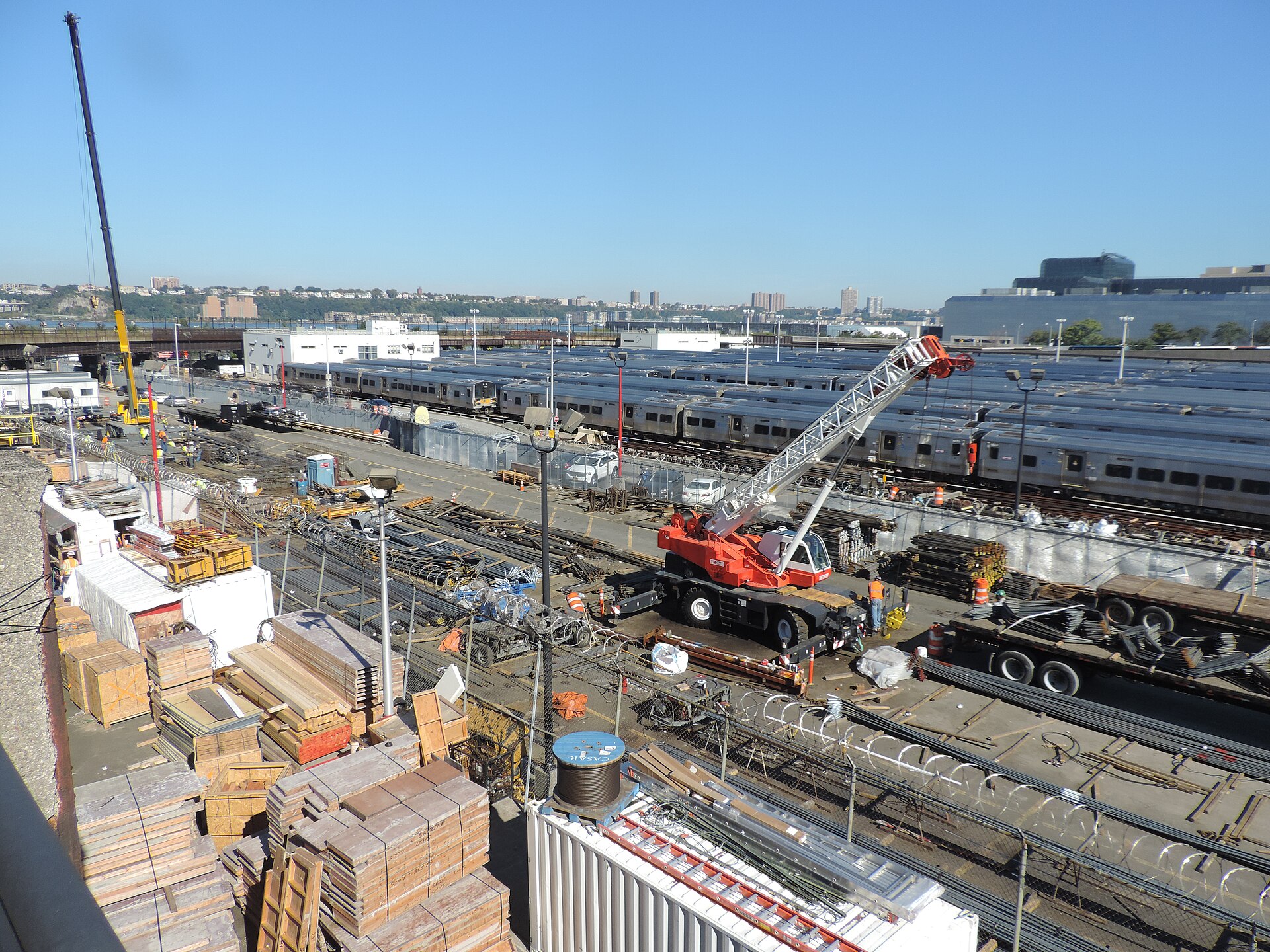
- Hero: construction materials staged at the West 30th Street yard, by Jim.henderson, CC0, via Wikimedia Commons
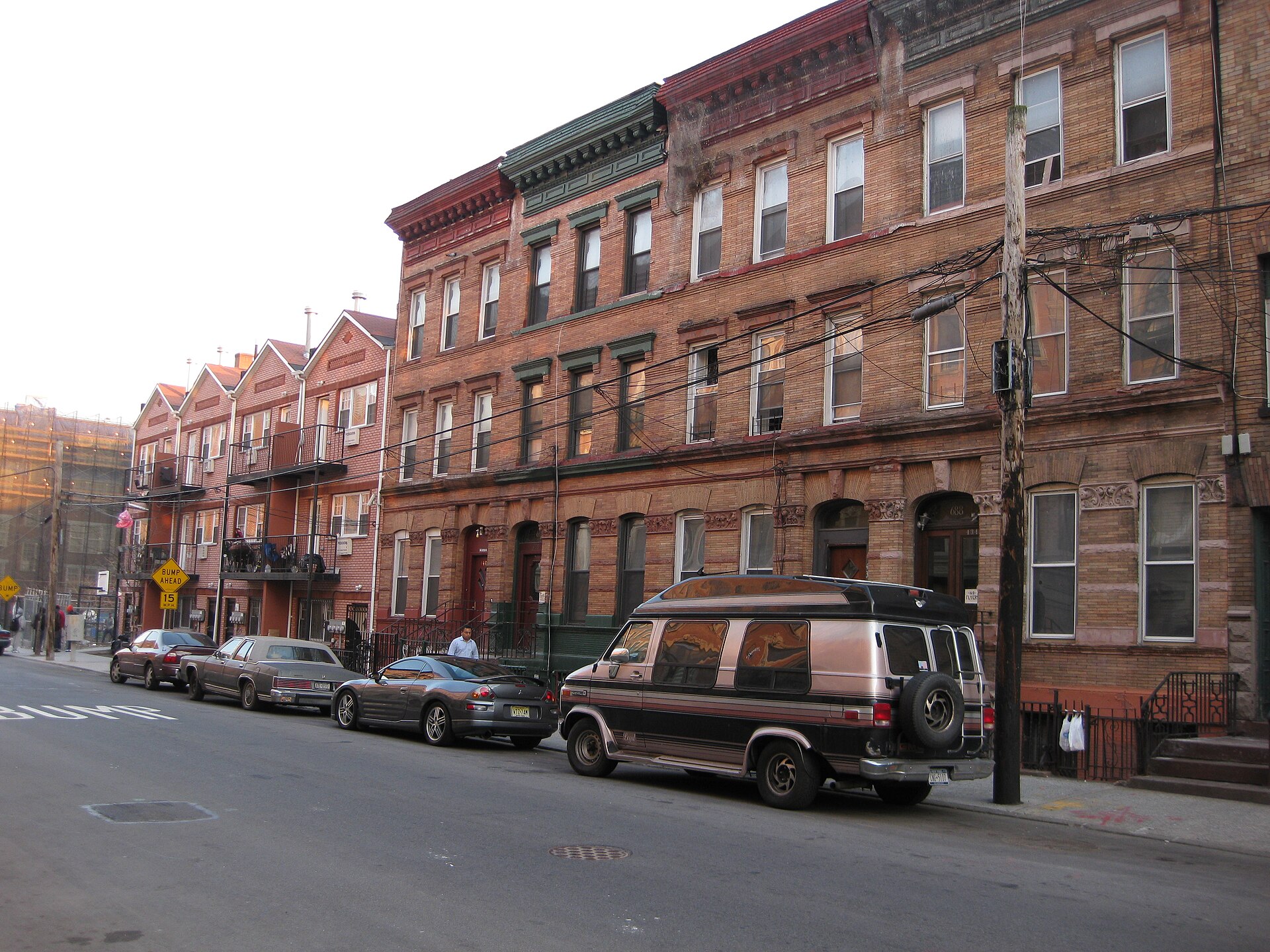
- Mott Haven: the Bertine Block, by Emilio Guerra, CC BY 2.0, via Wikimedia Commons
- Long Island City: Hunters Point waterfront, by King of Hearts, CC BY-SA 3.0, via Wikimedia Commons
- The two listing cards carry the brokerage’s own photography through the REBNY RLS feed, credited on each card
Related on this site
- The NYC new development buyer’s guide
- Why you want your own broker on a sponsor sale
- The 2026 NYC mansion tax guide
- Condominium against co-operative in New York
- Our Q2 2026 market report
Questions about a specific building or a sponsor contract: contact the team.
This article is general information about the New York City housing market and about published statutes. It is not legal, tax or mortgage advice, and it is not a promise about any commission. Confirm 485-x eligibility, closing costs and transfer tax responsibility with your attorney before you sign anything.
Frequently Asked Questions
Developers filed 387 new building applications proposing about 9.2 million square feet. Of those, 172 were apartment buildings of three units or more, holding 8,060 proposed apartments on my count of the Department of Buildings file and 8,064 on REBNY’s. That is less than half the 17,500 apartments a quarter the City says it needs. A filing is an application, not a building, and proposed apartments should never be read as completed housing.
Because Real Property Tax Law section 485-x, the tax exemption that replaced 421-a in 2024, draws its line at one hundred. A project of 100 or more apartments has to pay a construction wage floor of $40 an hour under Labor Law sections 220 and 220-b, rising 2.5 percent every July, and has to make 25 percent of its apartments affordable instead of 20. The tax exemption runs 35 years either way, so the hundredth apartment costs money and buys nothing. Nineteen of the 172 apartment buildings filed last quarter propose exactly 99 apartments and only one was filed anywhere between 100 and 149.
Barely, and not at all in Manhattan. Section 485-x(1)(y) excludes any condominium or co-operative in the borough of Manhattan from the homeownership benefit outright. Outside Manhattan a homeownership project has to hold average assessed value under $89 a square foot and every buyer has to sign a five-year primary residence covenant, for a 20-year exemption against 35 or 40 for rental. Measured against the condominium apartments on our books, about six percent would clear that assessment cap, and none of the new-development condominiums outside Manhattan.
Not from this quarter. Manhattan filed seven new buildings between April and June 2026. One of them, Extell’s 86-storey tower at 80 West 67th Street, is 85 percent of the borough’s proposed floor area on its own. The other six come to 274 apartments, 198 of which are in three Washington Heights buildings. Anything filed now takes roughly four years to deliver, so the nine genuinely new for-sale apartments currently on our Manhattan books are close to the field you have to choose from.