

The short version
Both of these sell as "the Upper East Side". A buyer sets a search radius, takes the neighborhood-wide price as the benchmark, and never sees that the label covers two quite different markets.
Lenox Hill closed two-bedroom condominiums at $1,616 per interior foot. Yorkville closed them at $1,325. That is a 22 percent spread across twenty blocks, which is almost exactly the gap between Lenox Hill and Chelsea.
The part that surprised me is that the cheaper market is also the faster one.
Buy in Lenox Hill if you want the Park and Madison Avenue side of the Upper East Side, the deepest inventory in Manhattan at 451 active listings, and the widest choice of prewar co-op stock at 329 two-bedroom closings. You will pay 22 percent more per interior foot and wait more than twice as long.
Buy in Yorkville if you want the same borough postcode for materially less. Yorkville closed two-bedrooms at $1,325 per interior foot against $1,616, and four-bedrooms at $1,489 against $2,406. It is also the tighter market despite being the cheaper one: 42 median days against 100.
Everything below is the evidence for those two sentences. It comes from closed sales rather than from asking prices, held at a fixed bedroom count so the two markets are actually comparable.
Cheaper and tighter at the same time
Median two-bedroom condominium closings, August 2024 to June 2026.
Lenox Hill
$1,616 a foot, 100 days
159 two-bedroom condominium closings at a median $2,325,000, with 77.7 percent finishing below ask.
451 active listings, the deepest live inventory of any submarket in this study.
Yorkville
$1,325 a foot, 42 days
51 two-bedroom condominium closings at a median $1,595,000, with 72.3 percent finishing below ask.
147 active listings, and the median closing took 97.0 percent of ask against Lenox Hill's 95.7 percent.
The unusual part
The discount does not come with more leverage
Result
Normally the cheaper market is the softer one. Here Yorkville is 18 percent cheaper per foot and clears in 42 days at a higher percentage of ask. You are not being paid to wait.
Lenox Hill's 451 active listings against 147 is where the negotiating room actually sits, and it is the expensive side that has it.
Buying Yorkville because it is cheap and expecting to grind the seller is the wrong plan. Buy it quickly.
Lenox Hill against Yorkville, side by side
Two-bedroom closings only, so the two columns describe the same kind of apartment. Sales counts sit in the source note.
Metric | Lenox Hill | Yorkville |
|---|---|---|
Median two-bedroom condominium close | $2,325,000 | $1,595,000 |
Price per interior foot | $1,616 | $1,325 |
Condominium closings in the cohort | 159 | 51 |
Median two-bedroom co-op close | $1,400,000 | $1,275,000 |
Co-op share of two-bedroom closings | 67.4% | 68.9% |
Median percent of asking price | 95.7% | 97.0% |
Closings below asking price | 77.7% | 72.3% |
Median days on market | 100 | 42 |
Mansion tax at that median | $29,062 | $15,950 |
Buyer Advantage, up to | $34,875 | $23,925 |
Active listings right now | 451 | 147 |
Four hundred and fifty-one listings is where the negotiation is
Lenox Hill carries 451 active listings. That is the deepest live inventory of any submarket in this study, more than twice Chelsea's and three times Yorkville's, in a neighborhood running roughly from 60th to 77th Street between the Park and the river.
It shows up in the behaviour. 77.7 percent of two-bedroom condominium closings finished below the asking price at a median 95.7 percent, and the median apartment sat 100 days. That is a market where an offer 6 or 7 percent under ask starts a conversation rather than ending one.
It is also the deepest co-op market on the Upper East Side by volume: 329 two-bedroom co-op closings at a median $1,400,000, against a condominium median of $2,325,000. A Lenox Hill co-op costs less than a Yorkville condominium, which is the arbitrage almost nobody runs.
Price per interior foot, by apartment size
A single neighborhood median mixes studios with penthouses. Holding the bedroom count fixed is the only way the two markets are actually comparable. A positive gap means Lenox Hill is dearer per foot at that size.
Size | Lenox Hill | Yorkville | Gap |
|---|---|---|---|
One bedroom | $1,319 | $1,170 | 12.7% |
Two bedroom | $1,616 | $1,325 | 22.0% |
Three bedroom | $1,856 | $1,595 | 16.4% |
Four bedroom | $2,406 | $1,489 | 61.6% |
Yorkville is the same postcode for a quarter less
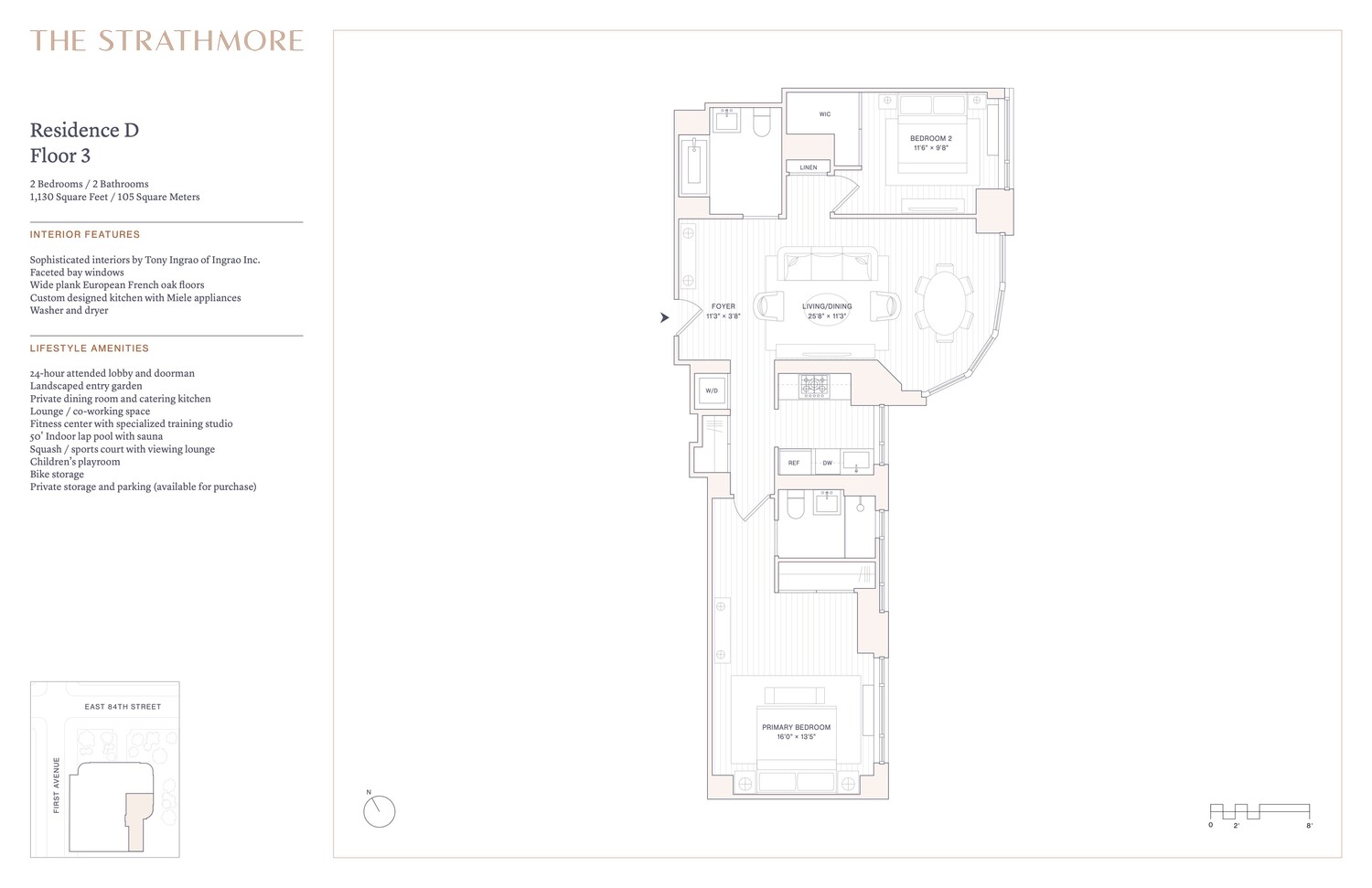
Yorkville closed two-bedroom condominiums at $1,325 per interior foot, the second cheapest of the fourteen submarkets in this study, behind only the Financial District. Against Lenox Hill that is 18 percent less per foot, and the median close was $1,595,000 against $2,325,000.
The Second Avenue subway is most of the reason the gap is not larger than it is, and most of the reason it has been closing. What has not changed is the stock: smaller prewar buildings and postwar white brick, with the new condominium supply concentrated on the avenues.
Two practical consequences. The median Yorkville two-bedroom sits comfortably under $2,000,000, so the mansion tax stays at 1 percent rather than stepping to 1.25, and the Buyer Advantage ceiling of 1.5 percent is half again the tax. And at 42 median days you need to be ready: this is not a market where the apartment waits for you.
What the closing table looks like at each median
The mansion tax applies to the whole purchase price rather than to the amount above the threshold, and the buyer pays it. The bands step at $1M, $2M, $3M and $5M.
At the median in | Purchase price | Mansion tax rate | Mansion tax | Buyer Advantage | Difference |
|---|---|---|---|---|---|
Lenox Hill | $2,325,000 | 1.25% | $29,062 | $34,875 | $5,812 |
Yorkville | $1,595,000 | 1.00% | $15,950 | $23,925 | $7,975 |
Which one fits the way you are actually buying
What are you optimising on the Upper East Side?
Price per foot
You want the most apartment for the money without leaving the Upper East Side.
Yorkville, by 22 percent at two bedrooms
$1,325 a foot against $1,616, on a median close of $1,595,000 against $2,325,000. At four bedrooms the gap widens to 61.6 percent. Set your search to Yorkville explicitly rather than to the Upper East Side, or the neighborhood-wide benchmark will show you the wrong apartments.
Room to negotiate
You expect to buy under ask and you have time.
Lenox Hill, counterintuitively
The expensive side is the soft one here. 77.7 percent of Lenox Hill closings finished below ask over a median 100 days, against Yorkville's 72.3 percent over 42 days, and Lenox Hill carries 451 active listings against 147.
The lowest entry price of all
You are open to a co-op and price is the binding constraint.
Review required
A Lenox Hill co-op, at a median $1,400,000
329 two-bedroom closings back it, the deepest co-op cohort in this study, and it comes in below the median Yorkville condominium at $1,595,000. So the cheapest route into the better address is the co-op, not the move north. Board approval and a financing cap are the trade.
The label on the listing is doing a lot of work here, and it is costing buyers real money in both directions.
Live two-bedrooms on both sides

422 East 72ND Street #32C, New York, NY 10021
2 Beds · 2 Baths
$2,248,000

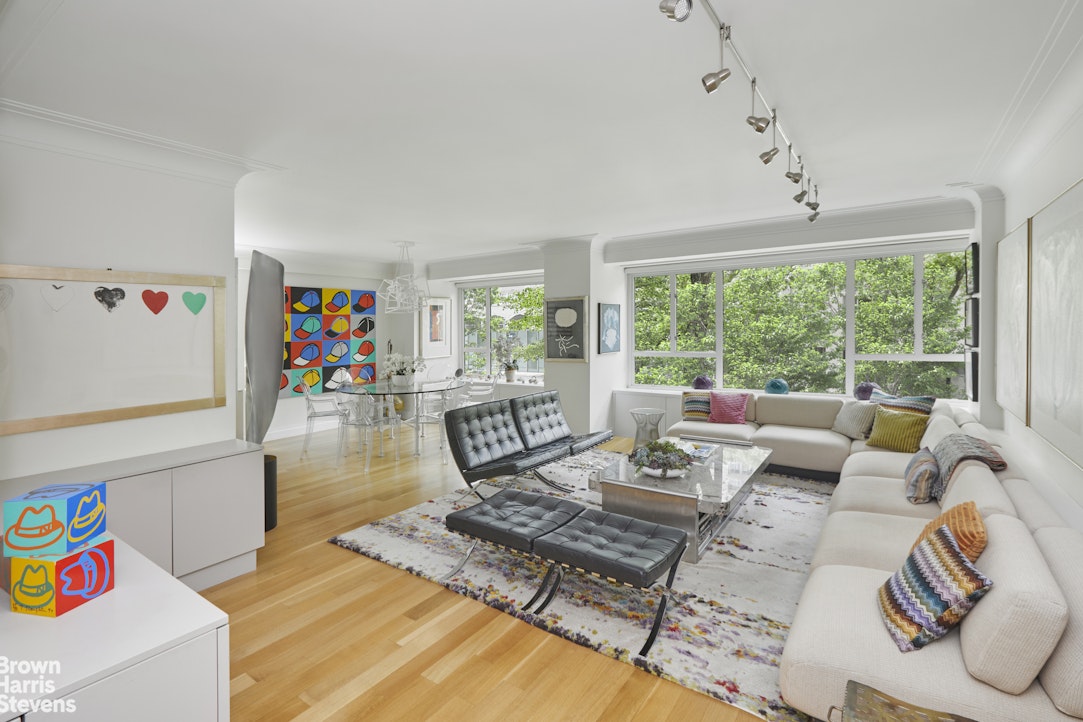
200 East 66TH Street #D202, New York, NY 10065
2 Beds · 2 Baths
$2,300,000

400 East 84TH Street #3D, New York, NY 10028
2 Beds · 2 Baths
$1,655,000
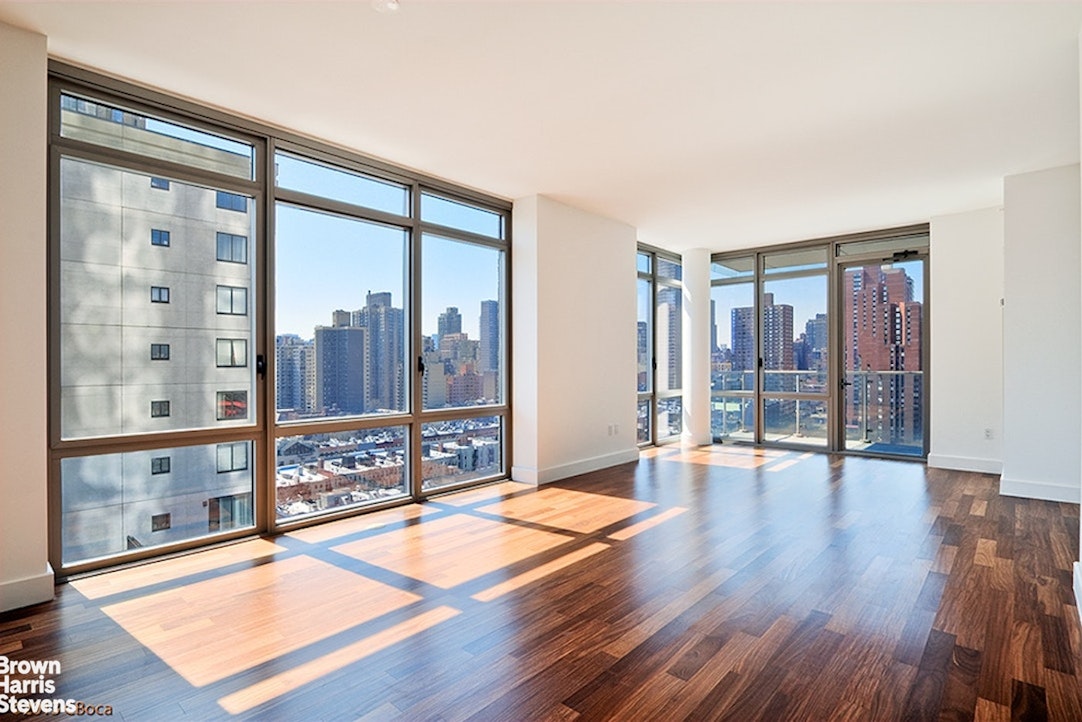
333 East 91ST Street #19D, New York, NY 10128
2 Beds · 2 Baths
$1,395,000
RLS IDX Data display by Real Estate Rebate Team LLC. This information is not verified for authenticity or accuracy and is not guaranteed and may not reflect all real estate activity in the market. ©2026 The Real Estate Board of New York, Inc., All rights reserved.
What I would do
This pair is the clearest argument I have for why a neighborhood-wide median is a bad instrument. Someone searching "Upper East Side" with a $1.9 million budget is shown apartments in two markets that are 22 percent apart per foot, and the benchmark they have been given sits between the two, so they overpay in Yorkville and get outbid in Lenox Hill.
My read: if the address matters to you, go to Lenox Hill and use the inventory. 451 active listings and 77.7 percent of closings below ask is genuine leverage, and at 100 median days you can afford to be the second buyer on an apartment rather than the first.
If the address does not matter and the square footage does, Yorkville is the better trade at every size, and materially so above three bedrooms. But bid like you are in a fast market, because you are: 42 days and 97.0 percent of ask is tighter than anything in Lenox Hill.
And the trade almost nobody makes: a Lenox Hill co-op at $1,400,000 is cheaper than a Yorkville condominium at $1,595,000. Same bedroom count, better address, lower price. What you take on is a board interview and a financing cap, and for a lot of buyers that is a fair exchange for twenty blocks and Central Park.
Neighborhood medians describe the neighborhood, not the building. Before you make an offer the in-building record beats all of this, and I will pull it for you. Full dossiers: Lenox Hill and Yorkville. All fourteen Manhattan submarkets ranked together: the Manhattan neighborhood comparison.
Frequently Asked Questions
Yes, and by more than most buyers expect for twenty blocks. Two-bedroom condominiums closed at $1,325 per interior foot in Yorkville against $1,616 in Lenox Hill, a 22 percent gap, with median closes of $1,595,000 and $2,325,000. At four bedrooms the gap widens to 61.6 percent.
It is normally sold as part of it, and that is the problem. Our records and the City's both split the Upper East Side into distinct submarkets, and the per-foot spread across them runs 22 percent, from $1,325 in Yorkville to $1,616 in Lenox Hill, with Carnegie Hill at $1,413 and the Upper East Side proper at $1,518. A search set to the whole area uses a benchmark that fits none of them.
Yorkville, despite being the cheaper of the two. The median two-bedroom condominium closed in 42 days at 97.0 percent of the asking price, against 100 days at 95.7 percent in Lenox Hill. Lenox Hill also carries 451 active listings against Yorkville's 147, so the negotiating room sits on the expensive side.
A co-op in Lenox Hill, at a median $1,400,000 across 329 closings, which is below Yorkville's condominium median of $1,595,000. Yorkville co-ops came in lower still at $1,275,000 on 113 closings. Co-ops are roughly two thirds of what trades in both, so this is the mainstream purchase rather than a compromise.
It applies anywhere in New York above $1,000,000, but which band you land in follows the neighborhood. Yorkville's median two-bedroom condominium at $1,595,000 sits in the 1 percent band, so $15,950. Lenox Hill's $2,325,000 crosses $2,000,000 into the 1.25 percent band, so $29,063 on the whole price. The buyer pays it.