


The short version
Ask anyone which is more expensive and you will be told Tribeca, on the grounds that it is quieter, more residential and less overrun. Our own earlier guide said it. It is not what the closings show.
Over the two years to June 2026, SoHo closed two-bedroom condominiums at $2,151 per interior foot against Tribeca's $1,853. That is a 16.1 percent SoHo premium, and it holds at three bedrooms and widens to 20.5 percent at four.
The one place the reputation is right is one-bedrooms, where Tribeca runs $2,017 against SoHo's $1,733.
Buy in SoHo if you want the cast-iron loft and you accept that you are paying for it. SoHo closed two-bedrooms 16.1 percent dearer per interior foot than Tribeca and four-bedrooms 20.5 percent dearer. Inventory is thin at 50 active listings, so the choice is narrow and moves slowly.
Buy in Tribeca if you want downtown loft space at the lowest per-foot number available. Tribeca is the cheaper of the two at two bedrooms and up, carries 130 active listings against 50, and 87.5 percent of its closings finished below ask against 78.6 percent in SoHo.
Everything below is the evidence for those two sentences. It comes from closed sales rather than from asking prices, held at a fixed bedroom count so the two markets are actually comparable.
Which one carries the premium depends on the apartment
Median closed price per interior square foot, condominiums.
At one bedroom
Tribeca is 16 percent dearer
$2,017 a foot against $1,733 in SoHo, on 33 and 11 closings.
This is the only size where the received wisdom survives contact with the record.
At two bedrooms and above
SoHo is dearer, by 16 to 21 percent
$2,151 against $1,853 at two bedrooms, $2,067 against $2,030 at three, $2,894 against $2,401 at four.
The two-bedroom comparison rests on 33 SoHo closings and 117 Tribeca ones, so the Tribeca side is much better sampled.
The thing to actually price
Scarcity, not quietness
Result
SoHo has 50 active listings against Tribeca's 130, and produced 33 two-bedroom closings against 117. You are paying for a market with almost nothing in it, and that premium shows up as soon as apartments get large.
It also takes longer: 106 median days on market in SoHo against 84 in Tribeca.
The premium tracks the size of the apartment, so a single "which is more expensive" answer was always going to be wrong.
SoHo against Tribeca, side by side
Two-bedroom closings only, so the two columns describe the same kind of apartment. Sales counts sit in the source note.
Metric | SoHo | Tribeca |
|---|---|---|
Median two-bedroom condominium close | $3,650,000 | $3,175,000 |
Price per interior foot | $2,151 | $1,853 |
Condominium closings in the cohort | 33 | 117 |
Median two-bedroom co-op close | $2,829,975 | $2,496,250 |
Co-op share of two-bedroom closings | 28.3% | 13.3% |
Median percent of asking price | 95.3% | 94.3% |
Closings below asking price | 78.6% | 87.5% |
Median days on market | 106 | 84 |
Mansion tax at that median | $54,750 | $47,625 |
Buyer Advantage, up to | $54,750 | $47,625 |
Active listings right now | 50 | 130 |
Price per interior foot, by apartment size
A single neighborhood median mixes studios with penthouses. Holding the bedroom count fixed is the only way the two markets are actually comparable. A positive gap means SoHo is dearer per foot at that size.
Size | SoHo | Tribeca | Gap |
|---|---|---|---|
One bedroom | $1,733 | $2,017 | -14.1% |
Two bedroom | $2,151 | $1,853 | 16.1% |
Three bedroom | $2,067 | $2,030 | 1.8% |
Four bedroom | $2,894 | $2,401 | 20.5% |
Fifty listings is the whole SoHo market
The number that explains this pair is not a price, it is the inventory. SoHo has 50 active listings right now. Tribeca has 130. Over the whole two-year window SoHo produced 33 two-bedroom condominium closings against Tribeca's 117.
A market that small does not price like a market. It prices like an auction with three bidders, and it takes longer: the median SoHo two-bedroom sat 106 days against 84 in Tribeca. Thin and slow at the same time is unusual, and it means an individual apartment can sit for months and still clear near ask because the buyer who wants that specific loft has nowhere else to go.
The practical consequence is that SoHo comparables are weak. With 33 closings spread across a two-year window and a wide range of loft sizes, the median tells you less than it does in a deeper market. Price a SoHo apartment off its own building, and treat the neighborhood figure as a sanity check rather than as evidence.
Tribeca is where the downtown loft is actually cheaper
If what you want is a large downtown apartment with high ceilings and big windows, Tribeca delivers it for less per foot at every size above one bedroom, and it delivers far more choice.
It is also the more negotiable of the two. 87.5 percent of Tribeca two-bedroom closings finished below the asking price against 78.6 percent in SoHo, and both medians landed within a point of each other at 94.3 and 95.3 percent of ask. With 130 active listings you can afford to lose one.
Both neighborhoods are condominium markets by the standards of the rest of Manhattan, but not entirely. SoHo ran 28.3 percent co-op on two-bedroom closings and Tribeca 13.3 percent. The old article on this site said co-ops were rare in both. In SoHo, roughly one two-bedroom closing in four is a co-op, which is not rare.
What the closing table looks like at each median
The mansion tax applies to the whole purchase price rather than to the amount above the threshold, and the buyer pays it. The bands step at $1M, $2M, $3M and $5M.
At the median in | Purchase price | Mansion tax rate | Mansion tax | Buyer Advantage | Difference |
|---|---|---|---|---|---|
SoHo | $3,650,000 | 1.5% | $54,750 | $54,750 | $0 |
Tribeca | $3,175,000 | 1.5% | $47,625 | $47,625 | $0 |
Which one fits the way you are actually buying
What is the loft actually for?
I want a cast-iron SoHo loft specifically
The building type is the point and you are not really cross-shopping.
SoHo, and expect to pay the scarcity premium
16.1 percent more per foot at two bedrooms, 20.5 percent at four, on 50 active listings. With a market this thin, price off the building's own trades rather than the neighborhood median, and be ready to move when the right one appears.
I want downtown space for the money
Loft character matters, but you are comparing across downtown.
Tribeca, at $1,853 a foot
Cheaper than SoHo at two bedrooms and up, cheaper than Chelsea, and sixth on price per foot across the fourteen Manhattan submarkets we track. It has 130 active listings, so there is a real choice to make.
I want negotiating room
You intend to buy under ask and you can wait.
Tribeca, on both measures
87.5 percent of closings below ask against 78.6 percent, a median 84 days against 106, and more than twice the live inventory. SoHo takes longer without giving up more, which is the worst combination for a buyer.
The pair looks like a taste question and prices like a supply question.
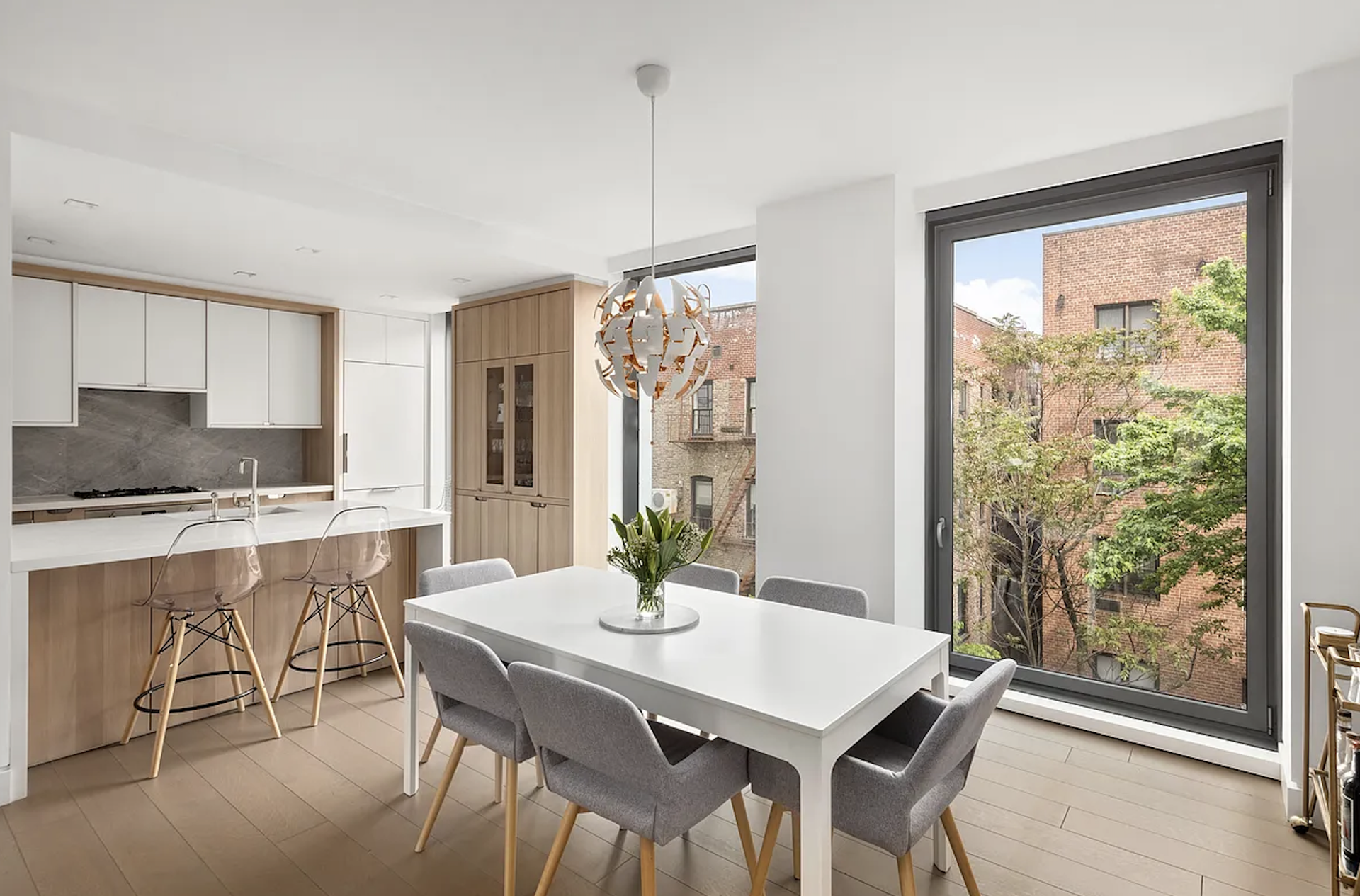
Live two-bedrooms on both sides

109 Mercer Street #3, New York, NY 10012
2 Beds · 2 Baths
$3,495,000

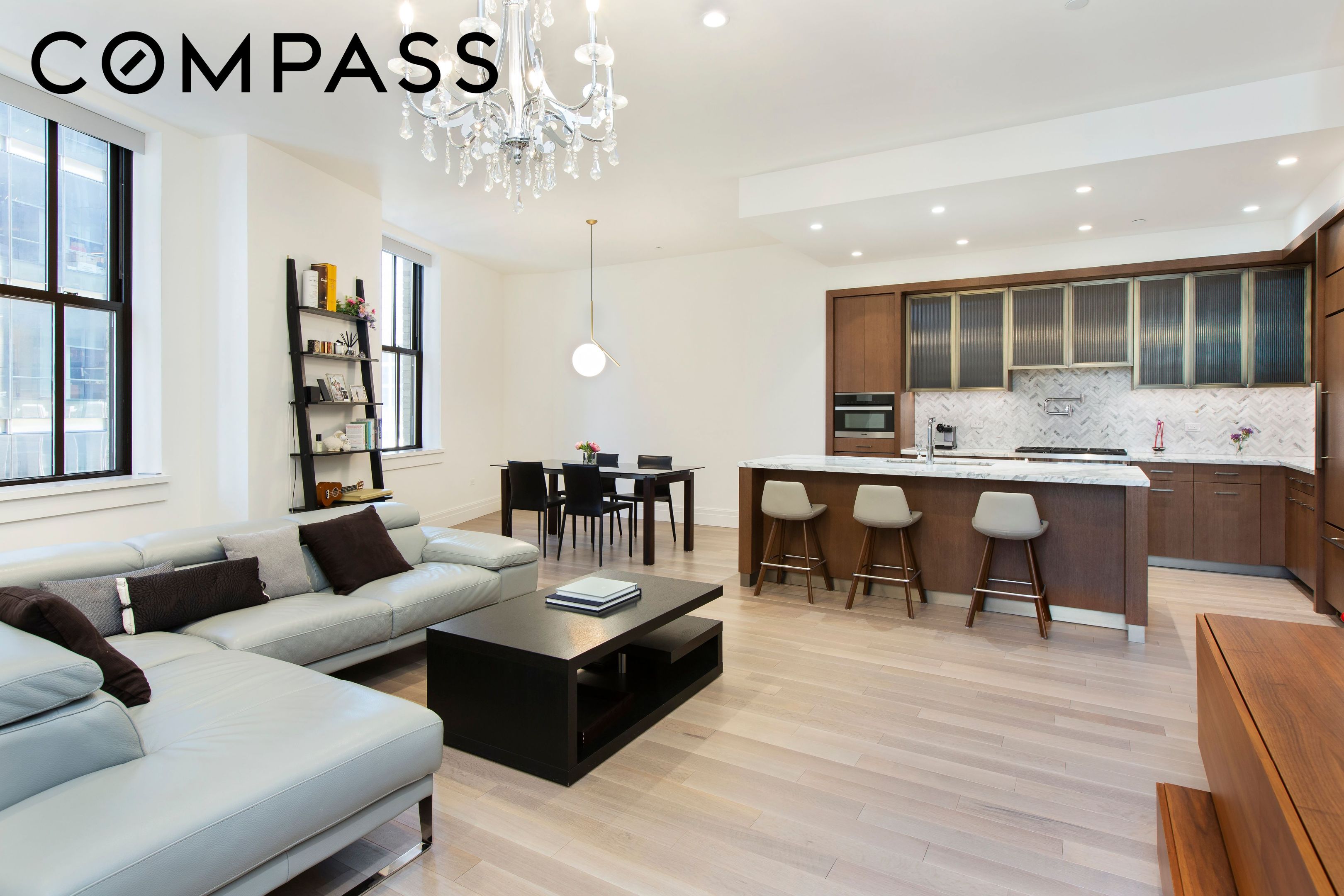
180 6TH Avenue #5A, New York, NY 10013
2 Beds · 2 Baths
$3,550,000
100 Barclay Street #14K, New York, NY 10007
2 Beds · 2 Baths
$2,995,000
RLS IDX Data display by Real Estate Rebate Team LLC. This information is not verified for authenticity or accuracy and is not guaranteed and may not reflect all real estate activity in the market. ©2026 The Real Estate Board of New York, Inc., All rights reserved.
What I would do
I wrote the version of this site's guide that said Tribeca is Manhattan's most expensive neighborhood per square foot and that Tribeca commands a premium over SoHo. Both statements are contradicted by our own closed record, and I would rather say so than quietly change it.
What is actually true: SoHo is dearer per foot at every size a family would buy, and the reason is that there is almost nothing for sale there. Fifty listings is not a market, it is a waiting list. If SoHo is the requirement, accept that you are paying for scarcity and stop looking for a bargain that does not exist in a pool that small.
If the requirement is a downtown loft rather than SoHo specifically, Tribeca is the better trade on every number I have: lower per foot, more inventory, more closings finishing under ask, and faster. The one exception is one-bedrooms, where SoHo is 14 percent cheaper per foot and worth a look.
One caution on all of it. The SoHo cohorts run 11 to 33 sales. I would not build an offer on a 33-sale median. Use it to pick the neighborhood, then price the apartment off its own building.
Neighborhood medians describe the neighborhood, not the building. Before you make an offer the in-building record beats all of this, and I will pull it for you. Full dossiers: SoHo and Tribeca. All fourteen Manhattan submarkets ranked together: the Manhattan neighborhood comparison.
Frequently Asked Questions
SoHo, at most apartment sizes, which is the opposite of the usual answer. Median closed price per interior foot ran $2,151 in SoHo against $1,853 in Tribeca at two bedrooms, $2,067 against $2,030 at three and $2,894 against $2,401 at four. Tribeca is dearer only at one bedroom, $2,017 against $1,733.
Because Tribeca posts higher headline prices per apartment on some cohorts and has the quieter, more residential reputation. Per apartment the two are close, with median two-bedroom closes of $3,650,000 in SoHo and $3,175,000 in Tribeca. Once you divide by interior area the ranking reverses, because Tribeca's converted warehouse floors are larger.
Very little. There are 50 active SoHo listings against 130 in Tribeca, and SoHo produced 33 two-bedroom condominium closings over the two years to June 2026 against Tribeca's 117. That scarcity is the most likely explanation for the per-foot premium, and it is also why SoHo neighborhood medians should be treated as indicative.
More than their reputation suggests, especially in SoHo. SoHo produced 13 two-bedroom co-op closings against 33 condominium ones, a 28.3 percent share. Tribeca ran 18 against 117, or 13.3 percent. The City's own sales file puts the co-op share of all apartment sales at 38.8 percent in SoHo and 16.7 percent in Tribeca.
SoHo. The median two-bedroom condominium sat 106 days against 84 in Tribeca, and fewer of its closings finished below ask, 78.6 percent against 87.5 percent. Slower without more discount is the least useful combination for a buyer.