

The short version
Most buyers use these two names interchangeably, and even the City does not quite agree with the portals about where the line is. The Department of Finance calls them Greenwich Village-Central and Greenwich Village-West.
On our record they are close on price and genuinely different on behaviour. Greenwich Village closed two-bedroom condominiums at $2,885 per interior foot, the highest of the fourteen Manhattan submarkets we track. The West Village came second at $2,690, 7.2 percent behind.
Then the ranking reverses at three bedrooms, and the speed difference is more than double.
Buy in Greenwich Village if you want the fastest, tightest market in Manhattan and you are buying one or two bedrooms. Greenwich Village closed at 100.0 percent of ask in a median 36 days, with only 44.4 percent of closings finishing below ask. It is also the deeper co-op market at 114 two-bedroom closings.
Buy in West Village if you want three bedrooms or more, or you want a little negotiating room. The West Village closed three-bedrooms at $3,183 a foot against Greenwich Village's $2,794 and four-bedrooms at $3,813 against $2,955, so the ranking swaps at the top, and 60.6 percent of its closings finished below ask.
Everything below is the evidence for those two sentences. It comes from closed sales rather than from asking prices, held at a fixed bedroom count so the two markets are actually comparable.
Same money, very different urgency
Median two-bedroom condominium closings, August 2024 to June 2026.
Greenwich Village
100.0 percent of ask, 36 days
Only 44.4 percent of closings finished below the asking price, the lowest share of any submarket in this study.
$2,885 per interior foot on 39 closings, the highest per-foot figure in Manhattan on our record.
West Village
97.3 percent of ask, 78 days
60.6 percent of closings finished below the asking price.
$2,690 per interior foot on 39 closings, with a median close of $3,175,000.
What that means at the offer stage
One of these rewards patience and one punishes it
Result
In Greenwich Village the median seller got the full asking price in five weeks. Arriving there with a downtown negotiating playbook means losing apartments to people who simply paid.
In the West Village the median apartment took eleven weeks and closed 2.7 percent under ask. Not soft, but there is a conversation to have.
The price difference is 7 percent. The difference in how you should bid is much larger than that.
Greenwich Village against West Village, side by side
Two-bedroom closings only, so the two columns describe the same kind of apartment. Sales counts sit in the source note.
Metric | Greenwich Village | West Village |
|---|---|---|
Median two-bedroom condominium close | $3,342,956 | $3,175,000 |
Price per interior foot | $2,885 | $2,690 |
Condominium closings in the cohort | 39 | 39 |
Median two-bedroom co-op close | $1,982,500 | $1,910,000 |
Co-op share of two-bedroom closings | 74.5% | 61.0% |
Median percent of asking price | 100.0% | 97.3% |
Closings below asking price | 44.4% | 60.6% |
Median days on market | 36 | 78 |
Mansion tax at that median | $50,144 | $47,625 |
Buyer Advantage, up to | $50,144 | $47,625 |
Active listings right now | 117 | 89 |
Both of these are co-op markets, whatever the listings feed suggests
Three quarters of Greenwich Village two-bedroom closings were co-ops. In the West Village it is 61 percent. So in both neighborhoods, the apartment that actually changes hands is more often a co-op than a condominium, and every condominium price quoted above describes the minority.
The co-op medians were $1,982,500 in Greenwich Village and $1,910,000 in the West Village, against condominium medians of $3,342,956 and $3,175,000. That is 40.7 and 39.8 percent less for the same bedroom count.
The condominium cohorts here are also thin, 39 closings each over two years. The co-op cohorts are 114 and 61. If you want the best-evidenced view of what a Village two-bedroom costs, the co-op number is the better-sampled one, and it is roughly $1.9 million rather than roughly $3.2 million.
Source: two-bedroom cohorts, 114 and 61 co-op closings against 39 and 39 condominium closings. The City's sales file independently puts the co-op share of all apartment sales at 76.7 percent in Greenwich Village-Central and 64.5 percent in Greenwich Village-West over the overlapping seventeen months.
Price per interior foot, by apartment size
A single neighborhood median mixes studios with penthouses. Holding the bedroom count fixed is the only way the two markets are actually comparable. A positive gap means Greenwich Village is dearer per foot at that size.
Size | Greenwich Village | West Village | Gap |
|---|---|---|---|
One bedroom | $2,113 | $2,046 | 3.3% |
Two bedroom | $2,885 | $2,690 | 7.2% |
Three bedroom | $2,794 | $3,183 | -12.2% |
Four bedroom | $2,955 | $3,813 | -22.5% |
The West Village is where the large apartments are

Above two bedrooms the ranking inverts. The West Village closed three-bedroom condominiums at $3,183 per interior foot against Greenwich Village's $2,794, and four-bedrooms at $3,813 against $2,955. On medians that is $7,174,822 against $6,465,000 at three bedrooms and $13,250,000 against $10,750,000 at four.
The West Village four-bedroom figure of $3,813 a foot is the highest single number anywhere in this study, across all fourteen submarkets and all bedroom counts. Landmarked townhouse blocks with very little large-format inventory produce exactly that.
It is also the more patient market of the two. A median 78 days against 36, and 60.6 percent of closings below ask against 44.4 percent. Neither is soft by Manhattan standards, but the West Village at least has a negotiation in it.
What the closing table looks like at each median
The mansion tax applies to the whole purchase price rather than to the amount above the threshold, and the buyer pays it. The bands step at $1M, $2M, $3M and $5M.
At the median in | Purchase price | Mansion tax rate | Mansion tax | Buyer Advantage | Difference |
|---|---|---|---|---|---|
Greenwich Village | $3,342,956 | 1.5% | $50,144 | $50,144 | $0 |
West Village | $3,175,000 | 1.5% | $47,625 | $47,625 | $0 |
Which one fits the way you are actually buying
How large an apartment, and how fast can you move?
One or two bedrooms, and I can move quickly
You are ready to bid and you can close without contingencies.
Greenwich Village, and be ready to pay ask
The median two-bedroom closed at 100.0 percent of the asking price in 36 days, and only 44.4 percent of closings finished below ask. This is the tightest submarket in the study. Get your financing sorted before you tour.
Three bedrooms or more
You need real space and you are comparing the two Villages.
Greenwich Village is the cheaper per foot at that size
$2,794 a foot at three bedrooms against the West Village's $3,183, and $2,955 against $3,813 at four. The West Village carries the highest four-bedroom per-foot figure in this entire study. Both cohorts are thin, so treat this as direction rather than precision.
I want the lowest entry price in the Village
The neighborhood is the requirement; the ownership structure is negotiable.
Review required
A co-op, in either, at roughly $1.9 million
$1,982,500 in Greenwich Village and $1,910,000 in the West Village, against condominium medians above $3.1 million. Three quarters and three fifths of what trades in these neighborhoods is a co-op, so this is the mainstream purchase rather than the compromise.
Between these two the size of the apartment decides the price and your timetable decides the neighborhood.
Live two-bedrooms on both sides

8 UNION Square #7B, New York, NY 10003
2 Beds · 2 Baths
$2,695,000

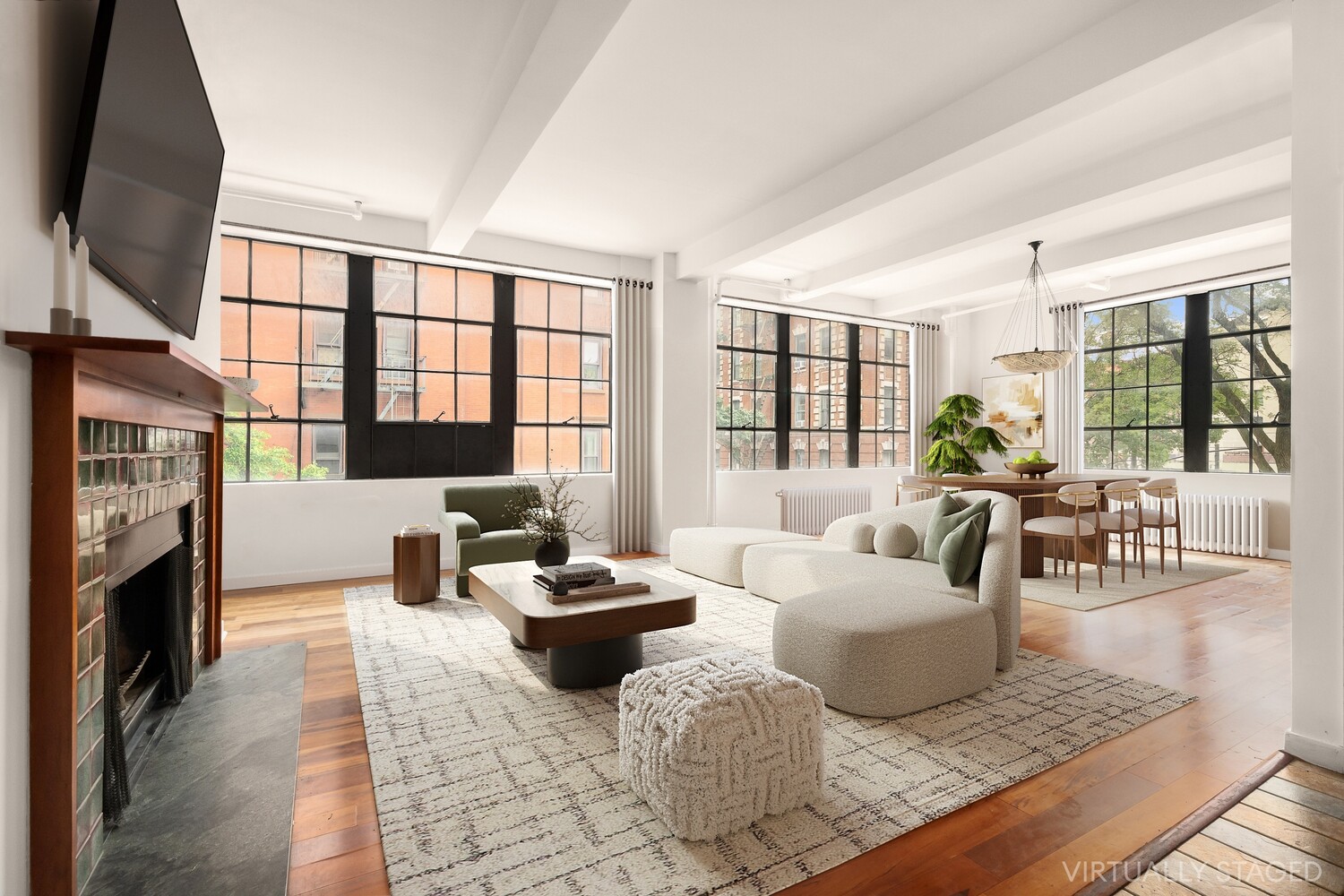
32 MORTON Street #2C, New York, NY 10014
2 Beds · 2 Baths
$3,200,000

421 Hudson Street #520, New York, NY 10014
2 Beds · 2 Baths
$2,750,000
RLS IDX Data display by Real Estate Rebate Team LLC. This information is not verified for authenticity or accuracy and is not guaranteed and may not reflect all real estate activity in the market. ©2026 The Real Estate Board of New York, Inc., All rights reserved.
What I would do
People agonise over this boundary and the price evidence says they should not. Seven percent per foot at two bedrooms, between two neighborhoods that share a border and a housing stock, is noise on a 39-sale cohort.
What is not noise is the pace. A median Greenwich Village two-bedroom got the full asking price in 36 days. That is the tightest cohort in this study and it changes how you have to behave: see it early, decide fast, and do not open at 92 percent expecting a conversation. In the West Village, at 78 days and 60.6 percent of closings below ask, there is one to have.
And in both, look at co-ops first. Three quarters of what trades in Greenwich Village is a co-op, the co-op cohort is three times better sampled than the condominium one, and the median is roughly $1.3 million lower. Anyone quoting you a $3.2 million Village two-bedroom is describing a quarter of the market.
Neighborhood medians describe the neighborhood, not the building. Before you make an offer the in-building record beats all of this, and I will pull it for you. Full dossiers: Greenwich Village and West Village. All fourteen Manhattan submarkets ranked together: the Manhattan neighborhood comparison.
Frequently Asked Questions
Geographically the West Village is the western portion, roughly west of Sixth or Seventh Avenue depending on whose boundary you use, and the City's own sales file calls them Greenwich Village-West and Greenwich Village-Central. On our closed record they price within 7 percent of each other at two bedrooms and behave very differently: Greenwich Village closed in a median 36 days at the full asking price, the West Village in 78 days at 97.3 percent.
It depends on the size. Greenwich Village closed two-bedroom condominiums at $2,885 per interior foot against the West Village's $2,690, the highest figure of the fourteen Manhattan submarkets we track. At three and four bedrooms it reverses: the West Village ran $3,183 and $3,813 a foot against $2,794 and $2,955.
Very fast by Manhattan standards. The median two-bedroom condominium closed in 36 days at 100.0 percent of the asking price, and only 44.4 percent of closings finished below ask, the lowest share of any submarket in this study. The West Village took a median 78 days with 60.6 percent below ask.
Yes. 74.5 percent of Greenwich Village two-bedroom closings and 61.0 percent of West Village ones were co-ops. The co-op medians were $1,982,500 and $1,910,000 against condominium medians of $3,342,956 and $3,175,000, so roughly 40 percent less at the same bedroom count. The City's own sales file puts the co-op share at 76.7 and 64.5 percent across all apartment sizes.
Around $1.9 to $2.0 million if you mean the typical apartment that trades, because three quarters of Greenwich Village two-bedroom closings and three fifths of West Village ones are co-ops. The condominium medians are $3,342,956 and $3,175,000, but those rest on 39 closings each against 114 and 61 co-op closings.