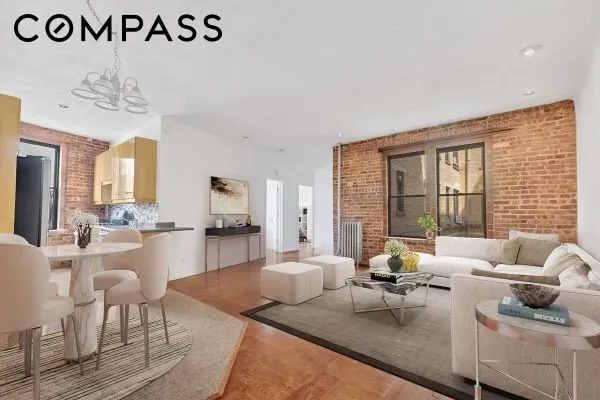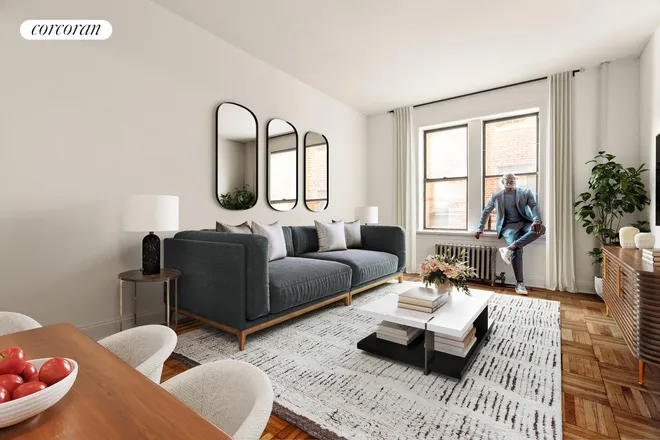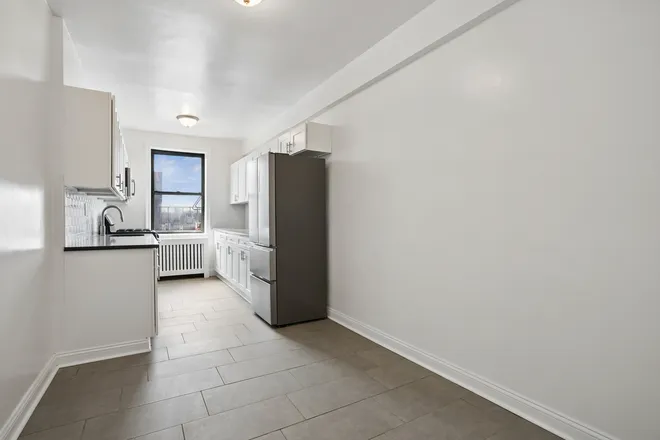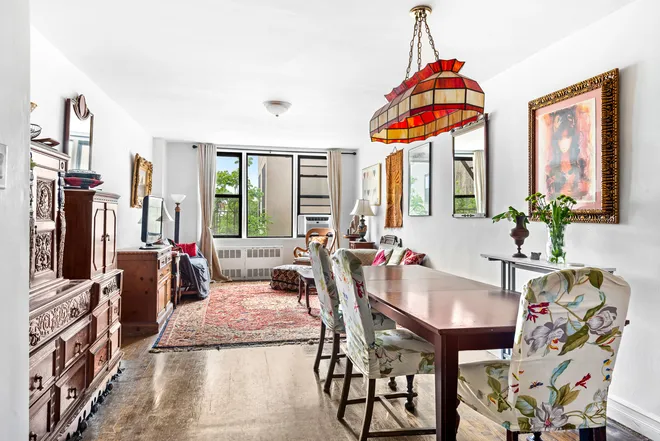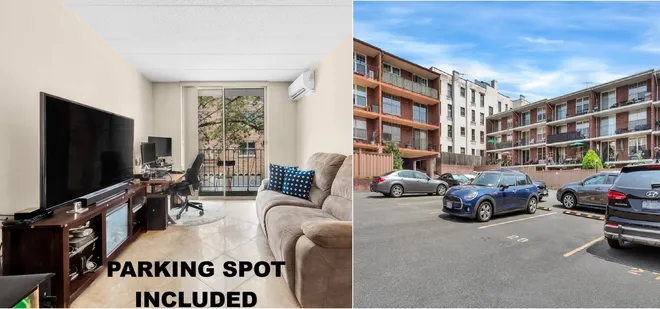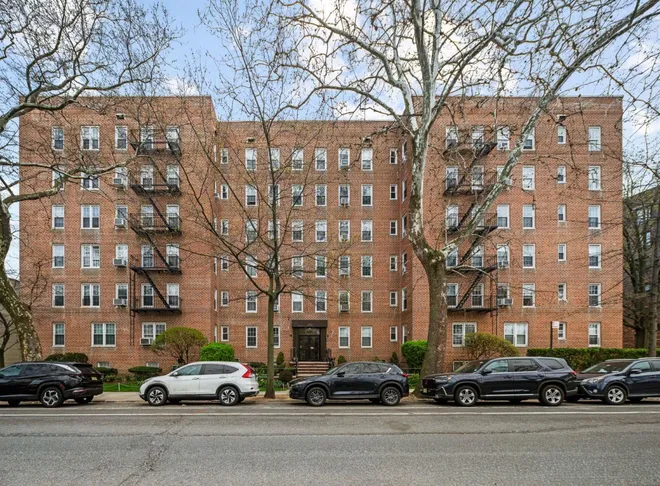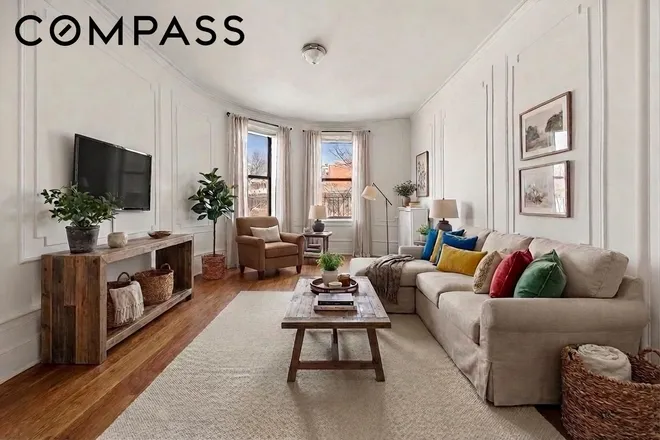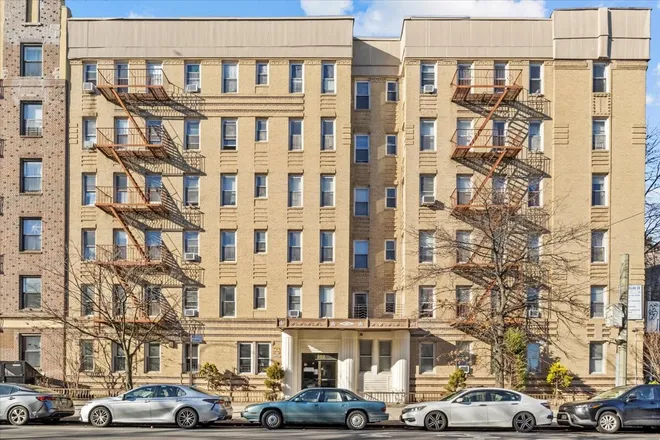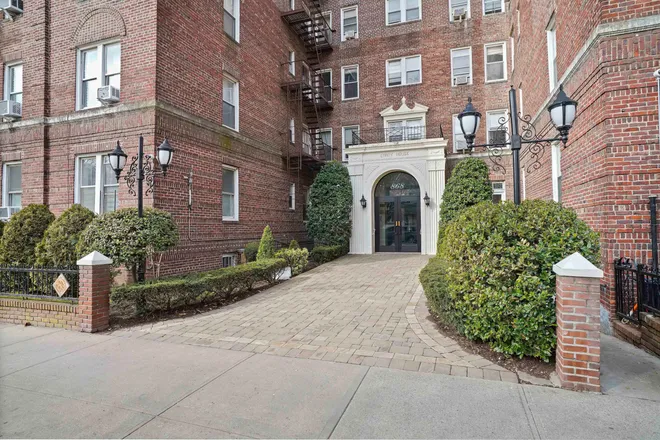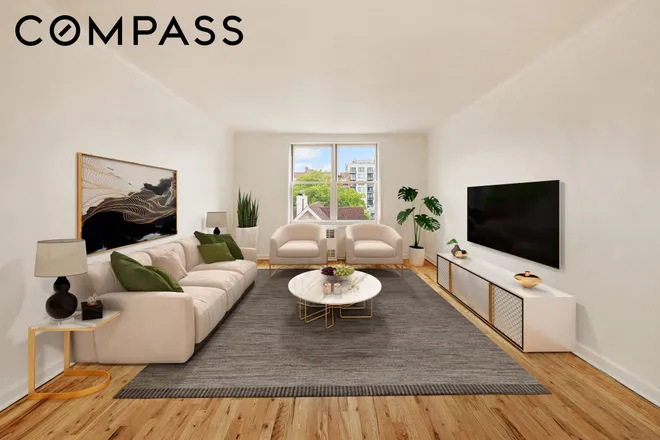
Brooklyn, NY · Co-ops
Brooklyn, New York Co-ops for Sale
358 co-ops for sale in Brooklyn, NY · Inventory updated 23 November 2026
Brooklyn NY Real Estate market snapshot
- Active listings
- 358
- Median asking price
- $515,000
- Median price per sq ft
- $609
- Median size
- 862 sq ft
By bedrooms: Studio 46 · 1 bed 166 · 2 bed 116 · 3 bed 27 · 4+ bed 2
Figures reflect active RLS listings at the time this page was built, after removing duplicate feed records. · Updated 23 November 2026
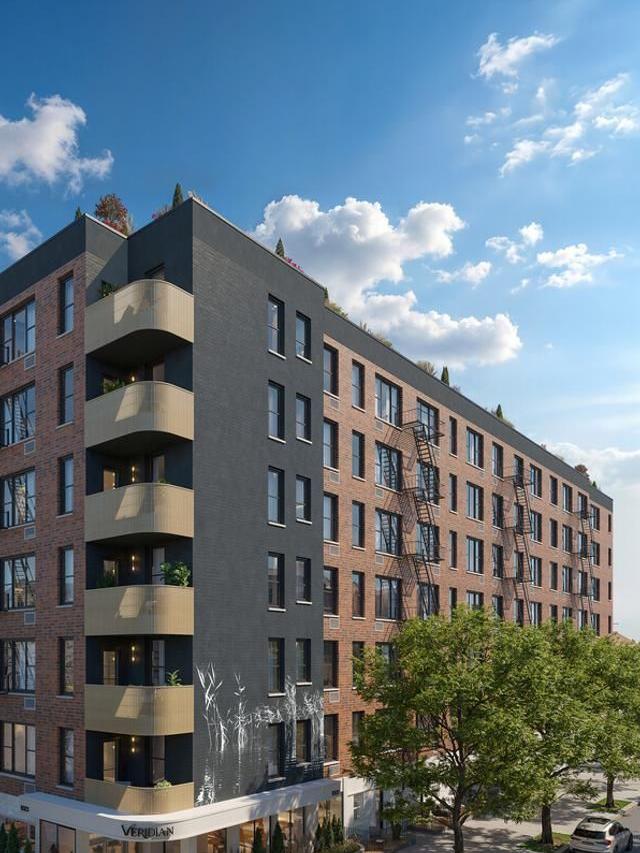
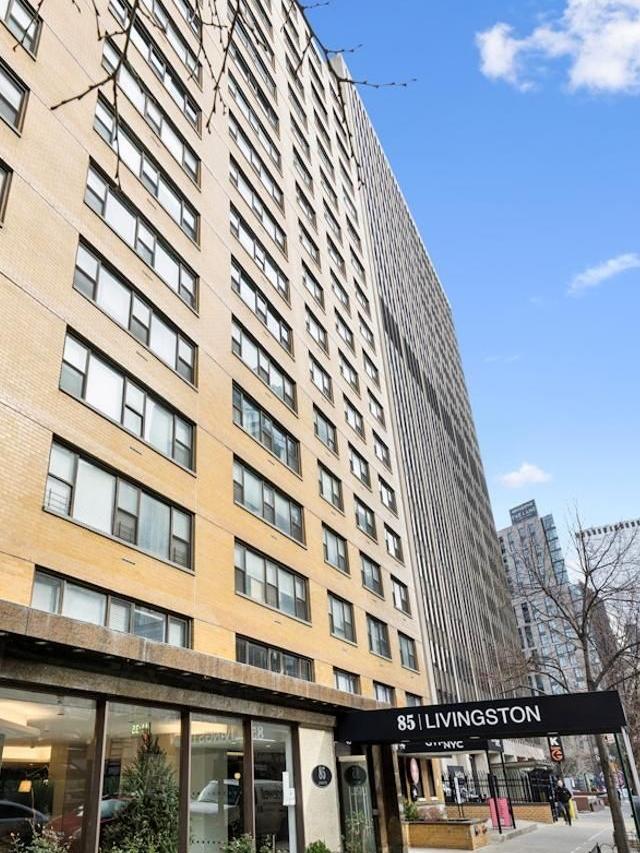
Notable buildings in Brooklyn



What the Buyer Commission Share looks like here
On a purchase at the median asking price of $515,000, an eligible buyer represented by us would receive an estimated $7,725 Buyer Commission Share at closing, assuming a 3% buyer-broker commission. Actual amounts depend on the listing-side compensation and your buyer agreement. How the Buyer Commission Share works →
Why a Brooklyn co-op costs half what a Brooklyn condo costs
The discount here is roughly twice Manhattan's. Across live asking prices, a Brooklyn co-op is priced at well under half what a Brooklyn condo costs per square foot. In Manhattan the same comparison shows a much narrower gap. Brooklyn's condo market has converged on Manhattan pricing; its co-op market has not. For a buyer who can satisfy a board and does not need to rent the apartment out, that gap is the largest single saving available anywhere in the borough, and it is the reason to read the rest of this page before ruling co-ops out.
Part of the gap is geography rather than ownership. Brooklyn's co-ops are concentrated in Brooklyn Heights and Downtown Brooklyn, then in a broad southern and western band through Bay Ridge, Fort Hamilton, Midwood, Kensington, Flatbush, East Flatbush and Sheepshead Bay. The condo stock sits in Williamsburg, Downtown Brooklyn, DUMBO, Bushwick and Greenpoint. The two markets barely overlap on a map, so some of what looks like a co-op discount is really the price of a different half of the borough. Compare like for like inside one neighbourhood before drawing a conclusion about the type.
The rest of the gap is what the board controls. A co-op board can decline a buyer without giving a reason. It sets a minimum down payment, commonly 25% in Brooklyn and higher in some buildings. It tests post-closing liquidity, usually wanting one to two years of maintenance and mortgage payments left in reserve. It limits subletting, often to a fixed number of years after one or two years in residence, and sometimes bans it. Each of those narrows the pool of people who can buy your apartment when you sell, and a narrower pool is a lower price.
Square footage comes with a warning. Only about a third of Brooklyn's active co-op listings state a square footage at all, against nearly every condo listing. Any price per square foot for co-ops is therefore drawn from a minority of the market and skews toward the buildings that measure and disclose. Treat it as a directional number, and on a specific apartment ask the listing agent for the measured area or measure it yourself.
Asking price per square foot: condo vs co-op, Manhattan vs Brooklyn
Median asking price per square foot on active RLS listings, 10 September 2026.
A Manhattan condo asks about 69% more per square foot than a Manhattan co-op. In Brooklyn the same gap is about 123%. Crossing the river saves a condo buyer roughly a quarter and a co-op buyer roughly two fifths, which is why the borough's own condo-to-co-op spread is close to double Manhattan's.
| Category | Condo | Co-op |
|---|---|---|
| Manhattan | $1,680 | $995 |
| Brooklyn | $1,293 | $579 |
What a co-op asks of a buyer that a condo does not
The practical differences that decide which type you can actually buy in.
The co-op discount is paid for at the front of the deal, in cash and in scrutiny, and recovered at closing, where a co-op is materially cheaper to complete. If the down payment and the reserves are there, a co-op is the cheaper apartment on both counts; if the plan involves an entity, a tenant or a thin deposit, the condo premium is buying something real.
Item | Co-op | Condo |
|---|---|---|
Minimum down payment | Set by the board, commonly 25% in Brooklyn, sometimes more, occasionally all cash | Set by your lender, from 10% |
Approval | Board package and interview; the board may decline without giving a reason | None. A right of first refusal the board almost never exercises |
Reserves after closing | Typically one to two years of maintenance and mortgage payments | Lender requirement only, usually a few months |
Renting it out | Restricted, often capped in years and fee-bearing; some buildings forbid it | Generally permitted |
LLC, trust or overseas buyer | Rarely accepted | Usually accepted |
Closing costs | Lower: roughly 1% to 2%, no title insurance, no mortgage recording tax | Higher: roughly 2% to 4%, more on a sponsor sale |
Flip tax on resale | Common, typically 1% to 3%, customarily seller-paid | Uncommon |
Three things to check before you fall for a cheap one. HDFC co-ops are income-restricted, and Brooklyn has a lot of them: the price looks remarkable until you meet the household income cap, the resale restrictions and, in some buildings, a flip tax heavy enough to change the maths on a sale. Land-lease buildings do not own the ground beneath them. The rent on that ground resets, and a reset that lands badly can double a maintenance charge and gut a resale value, so ask when the lease expires and when the rent next resets before anything else. Sponsor units in a co-op are the one place where the usual rules loosen: no board approval, sometimes no financing minimum, sometimes the right to rent the apartment out. They cost more than an ordinary resale in the same building, and for a buyer a board would decline they can be the only route in. Any of the three can be the right purchase at the right number; none of them should be a surprise found during due diligence.
Maintenance, and the cheap end of the market
Maintenance is the number that decides a co-op, and almost nobody publishes it. Not one page ranking for Brooklyn co-ops today shows a monthly maintenance figure, yet it is what separates two apartments at the same asking price. Maintenance covers more than a condo's common charges do. It carries your share of the building's property tax, its underlying mortgage, heat, staff, insurance and repairs, all in one payment. A condo splits those: common charges for the building, a separate tax bill from the city. So a $600 condo common charge and a $1,400 co-op maintenance can be the same monthly cost once the condo's taxes arrive. Compare maintenance against common charges plus tax, work out the payment per square foot where a square footage exists, and ask the managing agent for the deductible percentage, the reserve fund balance and any assessment currently running.
Brooklyn is where New York's affordable co-op stock actually is. Entry-level asking prices start around $150,000 to $200,000, and the depth is in Sheepshead Bay, Midwood, Brighton Beach, Bay Ridge, Kensington and East Flatbush rather than the brownstone neighbourhoods. The HDFC and land-lease questions above apply hardest in this tier, and there is a third to add to them: an underfunded reserve shows up as an assessment on top of maintenance, which no listing is obliged to mention. A cheap co-op with a healthy building is one of the best purchases available in New York; a cheap co-op with a sick one is the most expensive.
Common questions about Brooklyn co-ops
Are co-ops worth buying?
For an owner-occupier in Brooklyn, usually yes on the numbers. A Brooklyn co-op asks well under half what a Brooklyn condo asks per square foot, closing costs are roughly 1% to 2% against 2% to 4% on a condo, and there is no title insurance and no mortgage recording tax. What you give up is flexibility: a board that can decline a buyer without giving a reason, a minimum down payment the board sets rather than your lender, and limits on renting the apartment out. If you are buying a home to live in, that trade is usually worth taking. If you are buying an asset to let, it usually is not.
How much does a co-op cost in Brooklyn?
Brooklyn's co-op median sale price was $728,000 in the second quarter of 2026, down 3% year over year while condos rose 14.8%. Asking prices on the active market sit lower, because the deepest co-op inventory is in south and west Brooklyn rather than the brownstone belt. Entry-level stock genuinely starts around $150,000 to $200,000 in Sheepshead Bay, Midwood, Brighton Beach and Bay Ridge. The live median asking price for the co-ops on this page is shown above the listings.
What are the disadvantages of buying a co-op?
Five, in the order they usually bite. The board can reject you without a reason and without an appeal. The down payment is set by the building, commonly 25% in Brooklyn and sometimes far more. You must show post-closing liquidity, often one to two years of maintenance and mortgage payments left in reserve. Subletting is restricted or banned, so the apartment is hard to hold if you move. And a flip tax of 1% to 3% is usually waiting when you sell. None of these appears on a listing; all of them are in the offering plan and the house rules.
Do you pay property taxes on a co-op in Brooklyn?
Not directly. The city taxes the building, the co-op corporation pays that bill, and your share arrives inside the monthly maintenance along with heat, staff, insurance and the underlying mortgage. That is why maintenance on a co-op looks high next to the common charges on a condo: it is doing more work. The portion attributable to property tax and building-mortgage interest is deductible on your own return, and the managing agent publishes that percentage each year. When you compare a co-op to a condo, compare maintenance against common charges plus the condo's separate tax bill, not against common charges alone.
How much do I need to put down for a Brooklyn co-op?
Twenty per cent is the floor rather than the norm. Many Brooklyn boards require 25%, some require more, and a few take cash only. Boards also test post-closing liquidity, typically wanting to see one to two years of maintenance and mortgage payments left in reserve after the deal closes. Those two numbers, not the mortgage rate, decide what you can actually buy, so ask for them before you fall for an apartment.
What is a flip tax and who pays it?
A flip tax is a transfer fee the co-op corporation charges when an apartment changes hands, commonly 1% to 3% of the price, sometimes a fixed amount per share or a percentage of the seller's profit. It is customarily paid by the seller, but it is negotiable and in a slow building sellers do push it across. The amount is set out in the offering plan and the house rules, so read them before you sign.
Can I sublet a Brooklyn co-op?
Usually only with limits. A typical policy asks you to live in the apartment for one or two years first, then allows subletting for a capped number of years, with board approval and a sublet fee each time. Some buildings forbid it outright. If the plan is to rent the apartment out, a condo is the straightforward answer, which is part of why condos cost more.
What is an HDFC co-op?
An HDFC is an income-restricted co-op created to keep apartments affordable, and Brooklyn has a lot of them, particularly in the cheapest tier of the market. Buyers must earn under a cap set by household size, and the building may also impose resale price limits and a high flip tax. They are genuinely cheap for what they are, but they are not an investment purchase, and the income test is verified at application rather than taken on trust. If you are searching under $300,000, check whether what you are looking at is an HDFC before you get attached to it.
More real estate resources for Brooklyn, NY
Co-ops for Sale by Brooklyn Neighbourhood
Brooklyn Co-ops by ZIP Code
- 11201 co-ops for sale
- 11226 co-ops for sale
- 11209 co-ops for sale
- 11218 co-ops for sale
- 11238 co-ops for sale
- 11230 co-ops for sale
Show moreShow less
Brooklyn Co-ops by Bedroom Count
Co-ops for Sale in Other Boroughs
Brooklyn Co-op Buyer Guides & Tools

Regis Roumila
Licensed Real Estate Broker · NY & NJ
- NY DOS Licence
- 10491211335
- Memberships
- REBNY & NAR Member
- Experience
- Over 25 Years of Local Expertise
Ask what the board requires
Every eligible purchase earns a Buyer Commission Share: up to 50% of the buyer-side commission actually received on the transaction, credited to you as Savings at Closing. Before the price matters at all, the down payment the board sets and the maintenance it charges decide whether a building is open to you.
358 co-ops are for sale in Brooklyn today, 14 of them listed in the past week. Send me the ones you are considering and I will get the maintenance, the down payment minimum, the sublet policy, and whether it is an HDFC or sits on a land lease, before you spend a weekend on a board package.